Sidewalk maker: Frank Salamid

26 August 2016

Frank Paul Salamid was born Francisco Paolo Salamido in the town of Monopoli, way down in the heel of Italy, on 23 October 1881. Family lore has it that he was in town for the 1906 earthquake and was a barber at the time. However, his name first appeared in the 1900 directory, in the classifieds as a cement contractor. Then and thereafter, his address was on Manila Avenue.

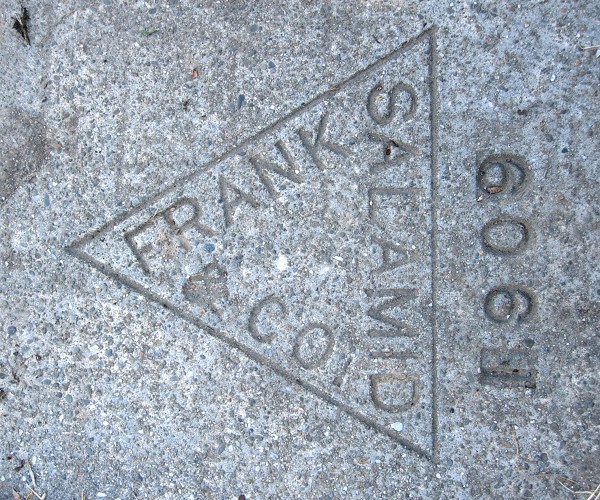
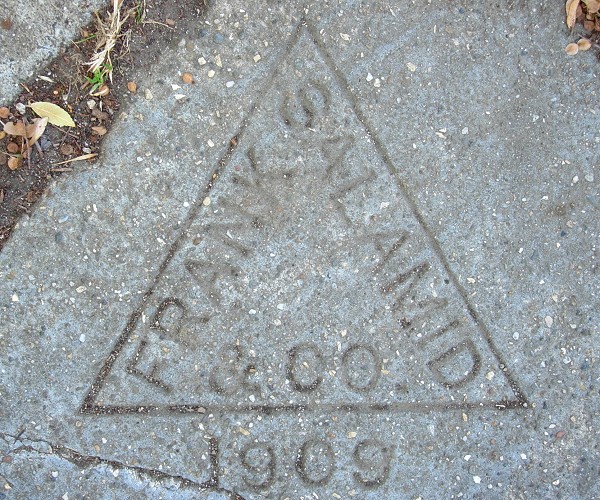
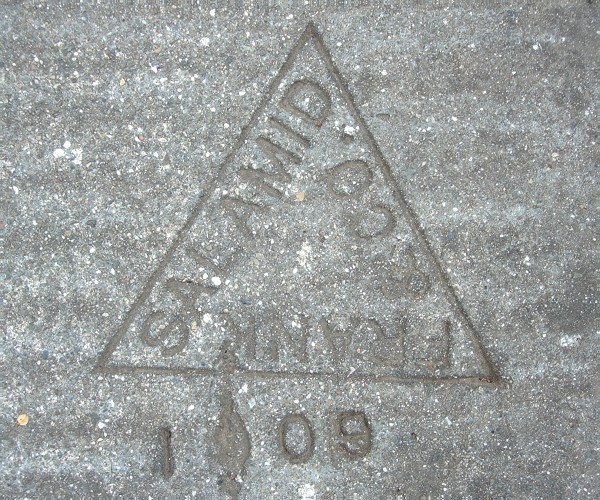
I’ve documented the triangular Frank Salamid stamp from 1909 to 1949, one of Oakland’s longest records. From the start, his marks always varied. Here are three different examples from 1909.
salamid-1

salamid-2

salamid-3

Although the stamps read “Frank Salamid & Co.,” in 1911 and 1912 he started wiping out the “& Co.” part. My only clue about this is that in the 1910 directory he used the address 619 47th Street. I surmise that he started a proper company at that address and soon thought better of it, reverting to a one-man practice or a small team based out of his home.

Frank’s brother Angelo (1896-1997) came to America in 1914, working first in Pennsylvania and then in Oakland with Frank. Angelo Salamid first appeared in the 1917 directory at the same address as Frank, 5348 Manila Avenue. They and their respective families seem to have lived together, or at least within a few homes of each other, into the 1940s.

I haven’t found a mark from 1920, but in 1921 Frank appeared to have lost one of his most important numerals.

salamid-4

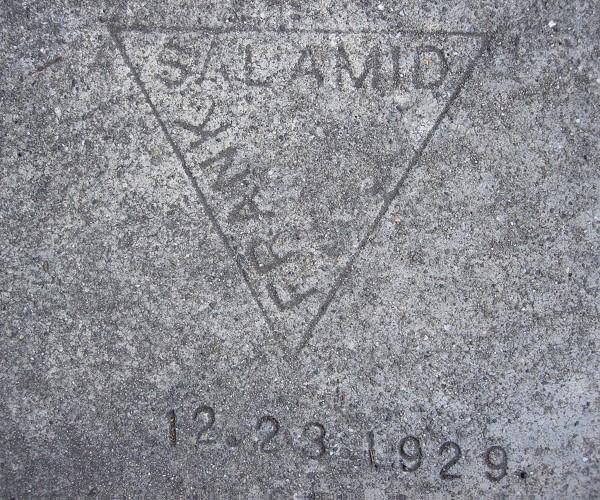
After that he acquired a new set of smaller numerals that allowed him to customize his marks even more capriciously — sometimes with months and days, sometimes inside the triangle instead of out. I’ve always thought this example from 23 December 1929 was poignant, coming as it did after the October stock-market crash and just two days before Christmas, when every extra dollar must have meant a lot.
salamid-5

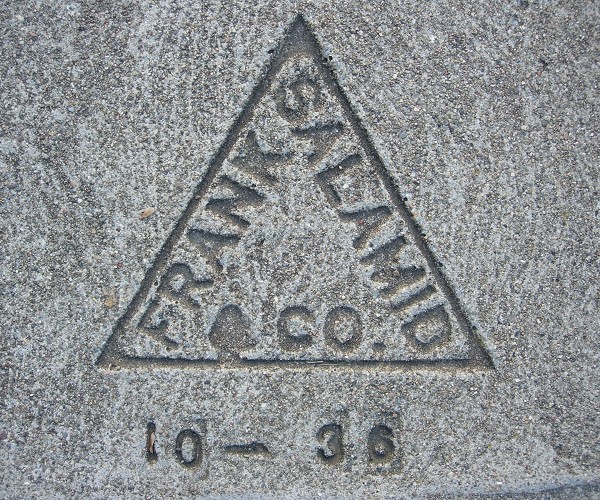
The 1930s were good for Frank and Angelo. Their work is integral to the Idora Park development, the remarkable 3700 block of Elston Avenue, and elsewhere. In this period he got lax about wiping away the “& Co.”
salamid-6

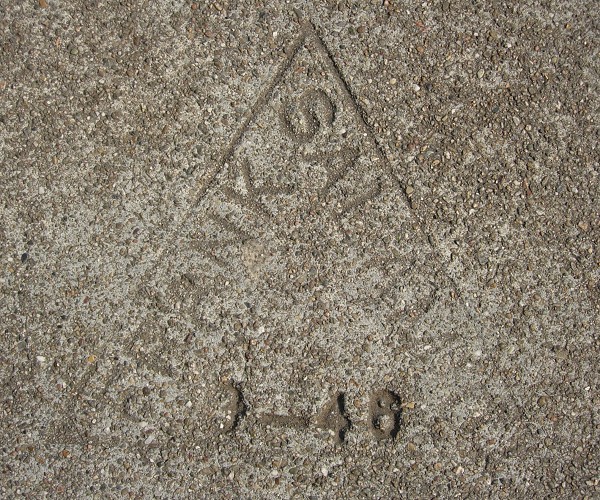
The latest really good date I have is 1948.
salamid-7

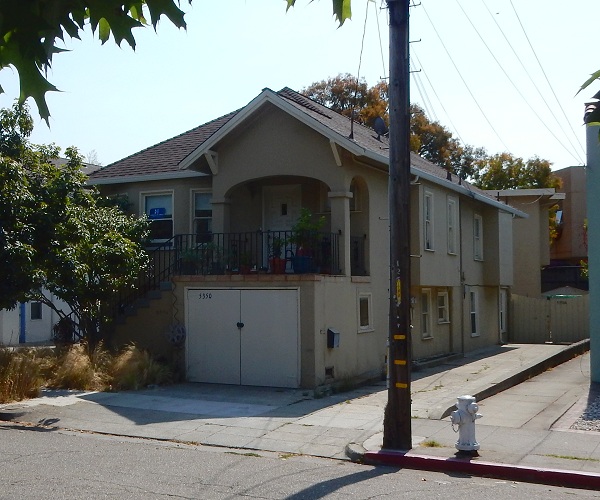
Soon thereafter (the family source puts it at 1951), Frank sold the business to Angelo, retired to Glenn County and that was it. The family home for most of their time was at 5350 Manila, but the sidewalk there is blank.
salamid-5350-manila

Frank died in December 1969. Angelo and his son Anthony (Tony) carried on with the ubiquitous “A Salamid” stamp from 1951 into the 1970s, although none of their marks were dated.

a-salamid-600

Angelo lived to the age of 100. Tony, now retired, lives in Pleasant Hill, and other descendants live in the East Bay. My thanks to Patrick Salamid for the family stories.
Bulwinkles

19 August 2016

The artist Mark Bulwinkle is widely known for his exuberant sculptures in uncoated steel. His signature series in the East Bay Bridge shopping plaza (or, as he calls it, Bulwinkle Plaza) surely gets as many viewers as any work by an Oakland artist. His smaller pieces grace many homes and gardens.

Today Bulwinkle’s studio, Bulwinkleland, is in high West Oakland, but for many years he installed sculptures all over his home on Manila Avenue. Eventually the house was shrouded in a fantastic frizz of welded rusty steel, each bit a piece of artwork, that resembled a giant crouton gone flagrantly moldy. I lived nearby and never tired of it. One day he decided to stop encrusting and start deconstructing. Soon enough the house was ordinary again, then he sold it and moved on.

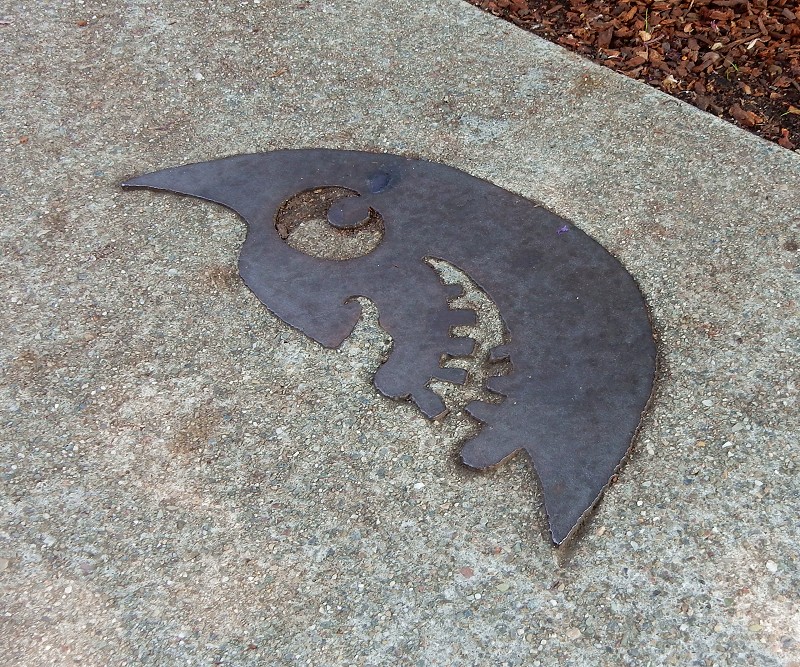
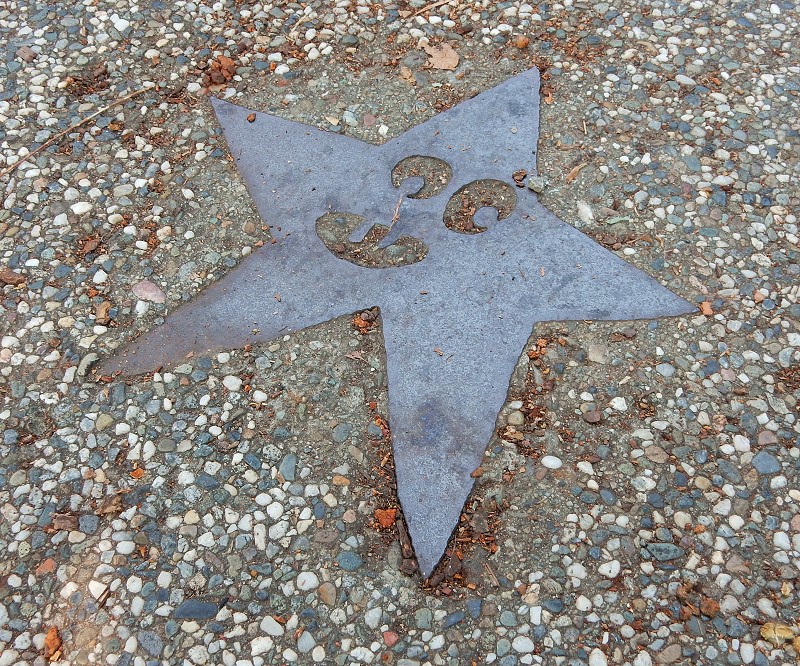
Left behind were these two works embedded in his neighbors’ driveways: a moon and a star.

bulwinklemoon

bulwinklestar

These remind me of the dreamlike spectacle the house presented at night, its great fringe of steel branches silhouetted against a moonlit sky, or backlit just as impressively by low Bay clouds.

Land and Water Conservation Fund plaque: North Oakland Regional Sports Center

12 August 2016

Land and Water Conservation Fund

This plaque sits discreetly by the entrance to the North Oakland Regional Sports Center at 6900 Broadway, where countless drivers pass on their way to jam up Route 24 or Tunnel Road.

The Land and Water Conservation Fund is a federal program that redirects offshore oil and gas revenues to other ends. Its website notes that it “was [my emphasis] a bipartisan commitment to safeguard natural areas, water resources and our cultural heritage, and to provide recreation opportunities to all Americans.” Both of our Senators and 37 of our 53 Representatives signed this year’s “Dear Colleague” letter supporting the program. One of them was a Republican.

This land was acquired and developed using LWCF funds between 1977 and 1985. Let’s assume the plaque was installed in 1985.

Vestiges of Western Union

5 August 2016

western-union

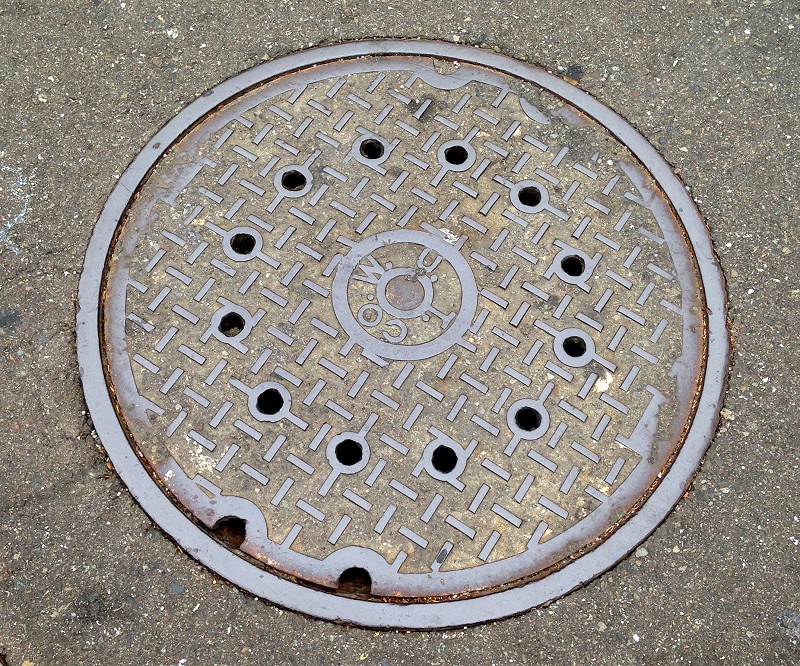
This utility-hole cover sits at the foot of Washington Street where it was placed by the Western Union Telegraph Company. Western Union was once the king of American communications, a colossus like the phone company used to be.

Oakland’s Telegraph Avenue got its name from a telegraph line that once ran up Claremont Canyon over the hills. That wasn’t Western Union’s — the Alta California Telegraph Company built it, in 1859. But soon enough Western Union subsumed Alta California and other local telegraph firms as part of constructing the transcontinental telegraph line in 1861. The story was compelling enough that Hollywood adapted Zane Grey’s fictionalization of it in the 1941 movie “Western Union,” directed by Fritz Lang and starring Robert Young.

This lid looks like it dates from the early 20th century. Western Union completed its monopoly in 1943 when it acquired the Postal Telegraph company (more on that firm in this post).

How did telegrams work, you ask. You would bring your message to a Western Union office and pay them to transmit it in code over a landline to its destination city, where another Western Union office would decode it, print it out and deliver it by messenger the same day. You paid by the word — and punctuation counted too. If you had to use a period, you paid for the word “stop”.

Today all that seems as lame as classified ads in a newspaper, but once upon a time it was a killer app. Telegrams were still a big deal when I was a child, in the 1950s and 1960s, but the only thing today’s Western Union transmits is money.

Sidewalk maker: Milan Cvetich

29 July 2016

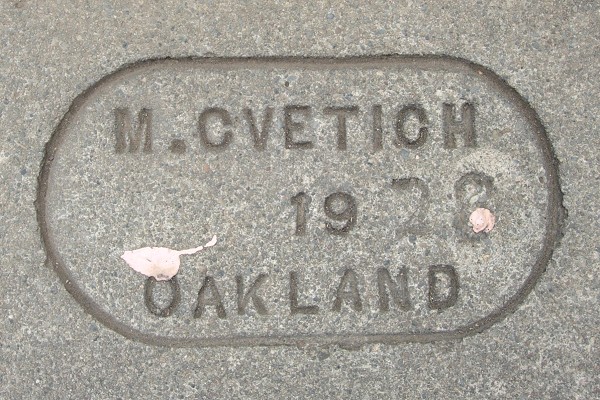
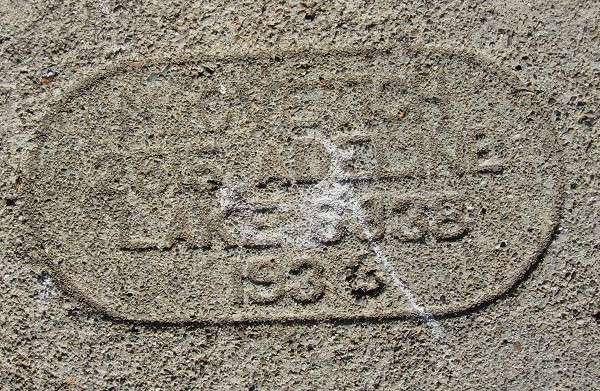
As I surveyed Oakland’s sidewalks, I came to be amused by the marks of M. Cvetich for the variety of stamps he used over his career. At first, in 1928, he had this ordinary, understated mark.

mcvetich-1

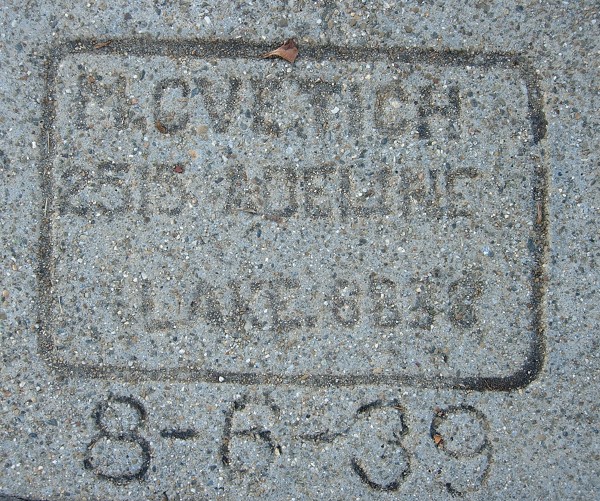
At the time, he was listed as Michael Cvetich in the phone book, living and practicing with his wife Annie at 2515 Adeline Street.

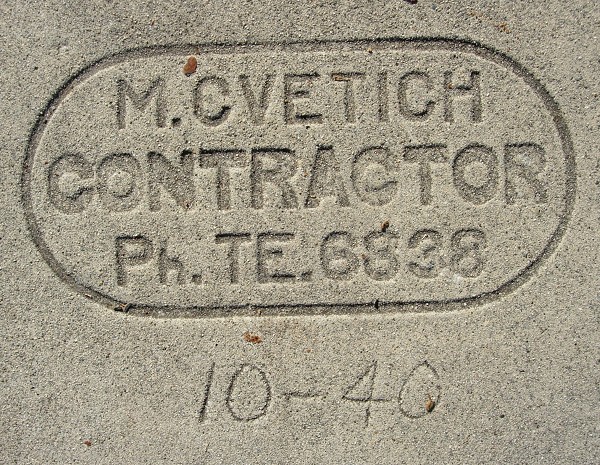
In the mid-1930s, he was listed as Mike Cvetich and he used at least three different stamps. Two included his address and phone number.

mcvetich-2

mcvetich-3

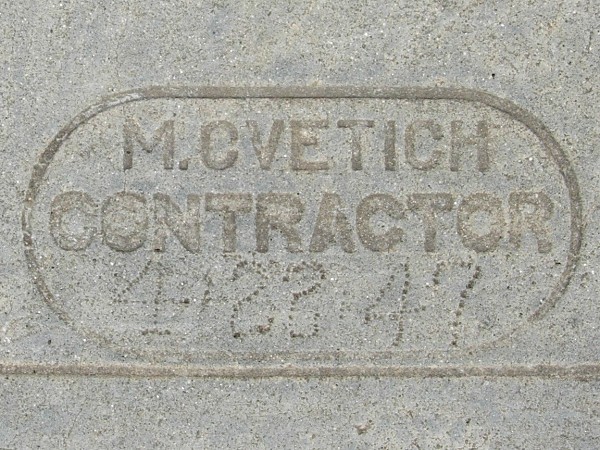
The third left off the address, and the phone exchange had changed. This was the stamp he stayed with through the 1940s to 1950, the latest date I have from him.

mcvetich-4

By 1940, he was giving his name as Milan, which I assume was his real name. But eventually he dropped the phone number.

mcvetich-5

In addition to these basic stamps, he varied in the way he marked the year, sometimes inside the mark and sometime outside, sometimes with the month and day and sometimes not. He wasn’t very consistent. To me that implies a certain playfulness for someone in this exacting line of work.

So now I have to ask, because I don’t know anyone named Cvetich: How is it pronounced? It looks suspiciously like it might sound like “quidditch.”

2016 – Seton Pacific Construction

8 July 2016

2016

5835 Keith Avenue

There are a bunch of these on Keith Avenue. Seton Pacific appears to have several offices in California; the one with this phone number is in San Francisco. I’ve never seen their marks before, so, welcome to Oakland!

This is the first mark I’ve found from 2016. Each year, I keep an eye out for marks from the new year. Here are the dates when I found my first current-year mark:

2016: 2 July
2015: 10 June
2014: 15 January
2013: 9 November
2012: 22 August
2011: 1 July
2010: 17 September
2009: 6 July

In 2008, the year I began this blog, I didn’t find a mark from the current year until Christmas, and that was an amateur mark. I didn’t find a professional mark from 2008 until June 2015.

This has been your meaningless data set for the week.

Sidewalk maker: Rosas Brothers

1 July 2016

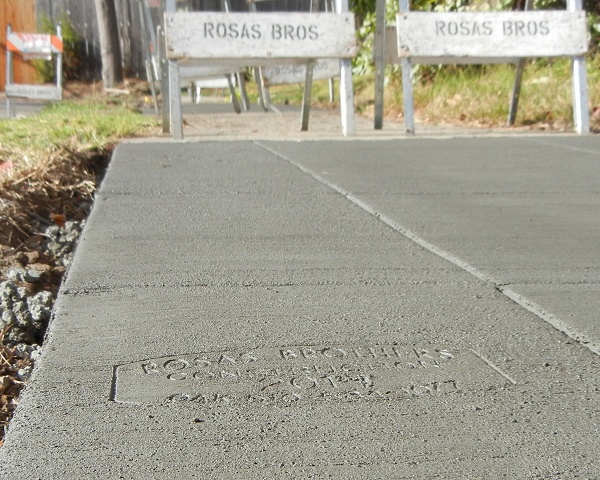
Rosas Brothers Construction, our leading current provider of sidewalk repairs, has left marks all over this town in recent years. When contracts come up for bid in the East Bay they compete hard, then get the job done and done well.

rosastruck

Although they don’t have a website, their sidewalk stamps have their phone number, an effective marketing tool used by Oakland concrete contractors since the mid-1920s. When I called that number, I learned that Victor, Umberto and Luis Rosas are the brothers who started this Oakland-based general contracting business in 2002. The offices are still in a little old house on Coliseum Way by the freeway. Their earliest stamp I’ve seen in Oakland is from 2009.

rosas09

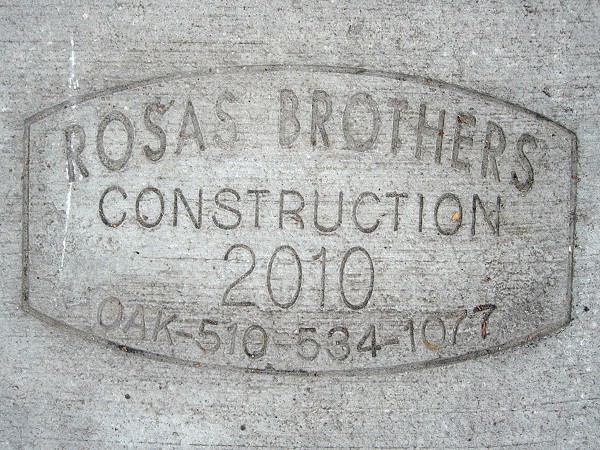
They have used two different marks. The one above came first, then the one below appeared in 2010. It appears that each crew carries its own stamp, because there’s a lot of variety in the marks. Some stamps have a complete set of numbers in the date, while others have the final digit of the date drawn by hand.

rosas10

One day in early 2014, I happened to walk past one of their work sites in the Laurel district, and there on the ground was one of their silicone rubber stamps.

rosasstamp

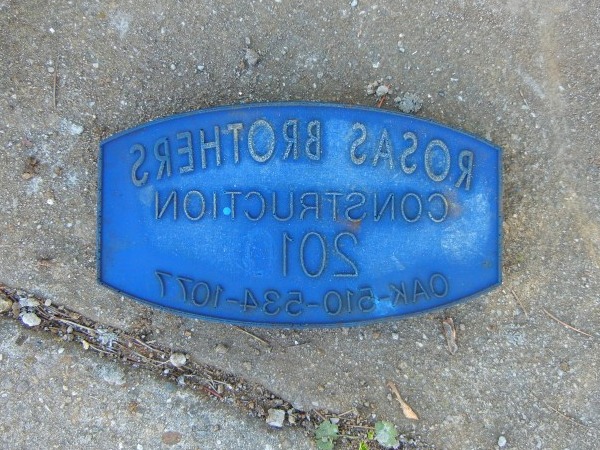
So this mark prints the data “201—” and the concrete finisher writes the last digit. The stamp goes on after the fresh concrete has begun to set — a worker sprays the job to soften the surface, then pushes the stamp in.

rosasjob

Some of Oakland’s sidewalk makers left 40 years’ worth of dates. Rosas Brothers has a ways to go, but they’ve made a very good start.