Bay City Iron Works

26 February 2016

baycityironworks

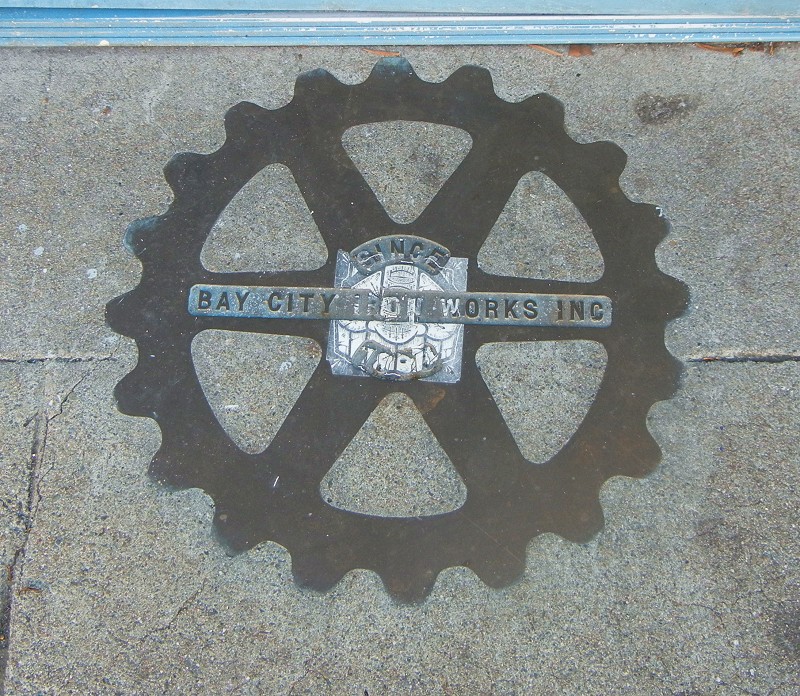
Oakland has many old businesses that have left their mark on the pavement. This marker for Bay City Iron Works is at 475 4th Street, a building that houses Ion Cars today. But the marker says, “Since 1885.” Perhaps this was its first home.

If you look up the company’s name today, Google points you to an empty lot at 2897 Chapman Street, in Jingletown. But the company’s earlier home was near the docks, at the corner of 3rd and Washington Streets (221 Washington). See this family biography of Harry Melville Thornally, who used to work there, for photos and letterhead of the place. In The Iron Age issue of October 3, 1901, the firm is reported to be in the process of building it. Today the sign on the building says “Parker Electric Mfg. Co.” I’m not sure what this website has to do with it, but check it out.

Alameda County, the Eden of the Pacific; the Flower Garden of California (Oakland Tribune, 1898) says of the firm, “The enterprise is located at 521 to 525 Third Street. It turns out all kinds of agricultural work, general jobbing in machine work, threshers, machine engines with straw-burning boilers, and irrigating pumps of the M. B. Schutzell design.”

Ventilator grates

19 February 2016

sidewalklights-1

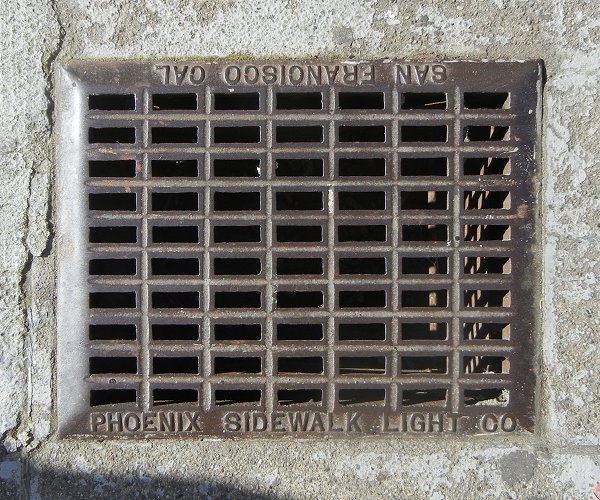
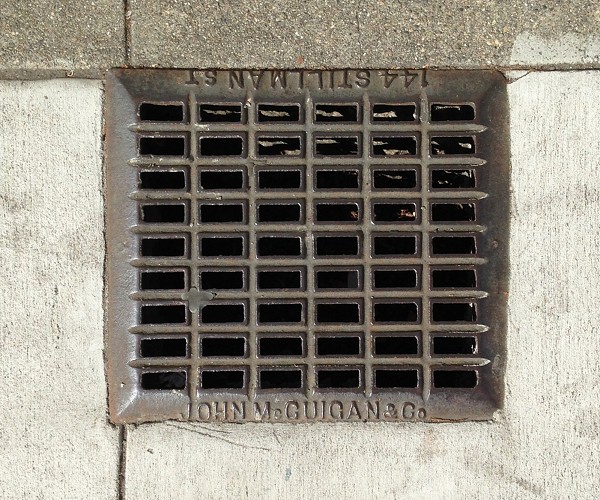
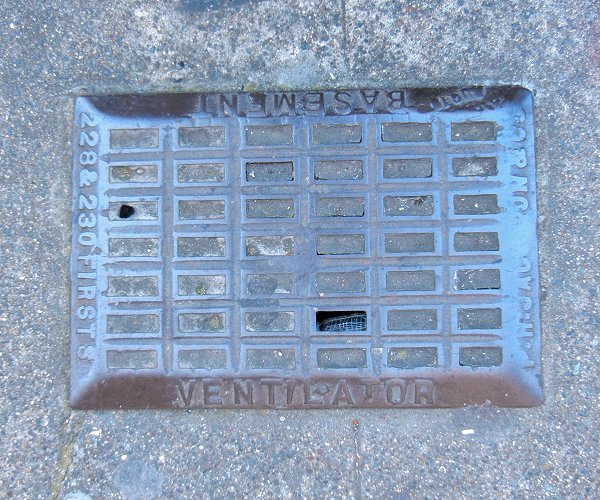
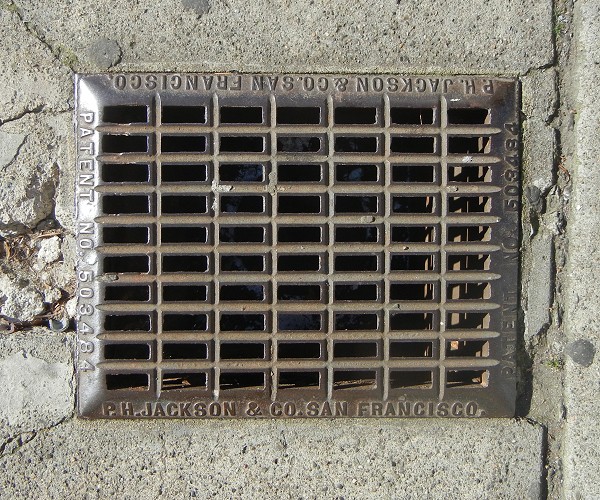
Older parts of downtown Oakland feature these iron grates in the sidewalk. Unlike the purple glass and concrete “vault lights” you’ll also see around downtown, the grates were for ventilation. I collected the following photos during an hour’s walk east of Broadway between 19th and 14th Street.

Here are two sizes of grate from the Phoenix Sidewalk Light Co. of San Francisco.

sidewalklights-2

sidewalklights-5

Please note that these are not sidewalk lights (vault lights), but ventilation grates. Phoenix made both items, according to the Historic Prism Glass Companies of the United States list on glassian.org. It was headquartered in the Monadnock Building on Market Street.

John McGuigan & Co. was also across the bay, at 144 Stillman Street. (The address is now under the freeway.)

sidewalklights-6

The king of the business appears to have been P. H. Jackson & Co., which was a major manufacturer of reinforced concrete and other innovative building elements beginning in the 1870s in San Francisco. The company, on the 200 block of First Street, continued business well into the 20th century. I will have more to say about the company in a future post.

Here are three different examples of their products.

sidewalklights-7

sidewalklights-4

sidewalklights-3

This is an unexpectedly deep subject!

The Lyon building

12 February 2016

As you walk up Broadway past the old Saw Mill building, you might notice two bronze letters in the sidewalk spelling out the word “NO.” That’s because you’re looking at it backward. Things make sense at the building’s main entrance, where a large stone/concrete lion with a dozen layers of paint looms over the door and the word “LYON” is spelled out in metal.

LYONsign

With that in mind, you can set out downhill from the doorway and see the letters rightly as the second half of LYON.

LYON-ONsign

Or go uphill instead to see their counterpart. I have to assume that both of these once had four letters.

LYON-LYsign

The building began in 1916 as Lyon Moving & Storage. It was quite grand, in the old Oakland style. Today, there are 53,000 storage companies in America, most of them quite bland and not a single one, I’m sure, with its name on the sidewalk in bronze.

Special marks: Cement Contractors Association of Alameda County

5 February 2016

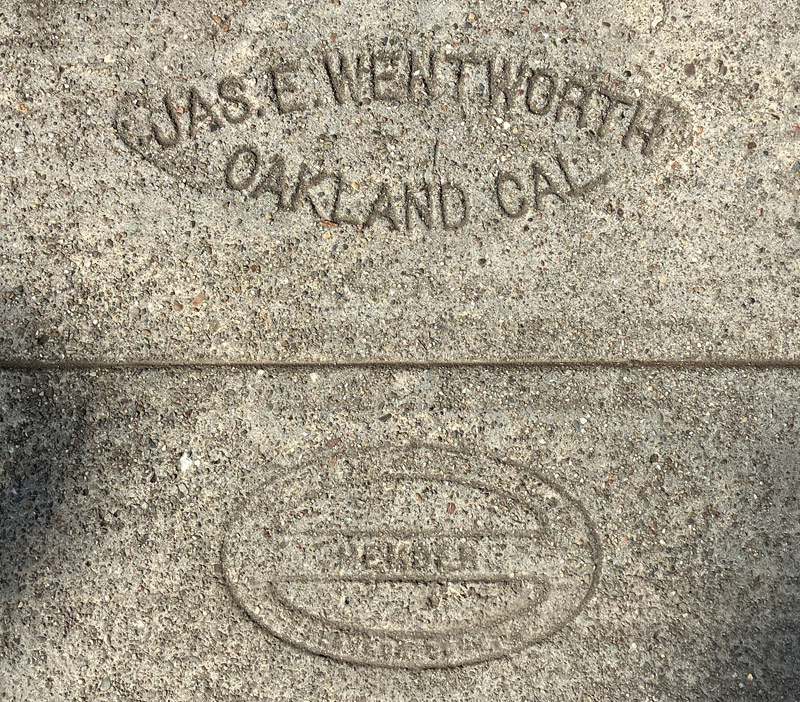
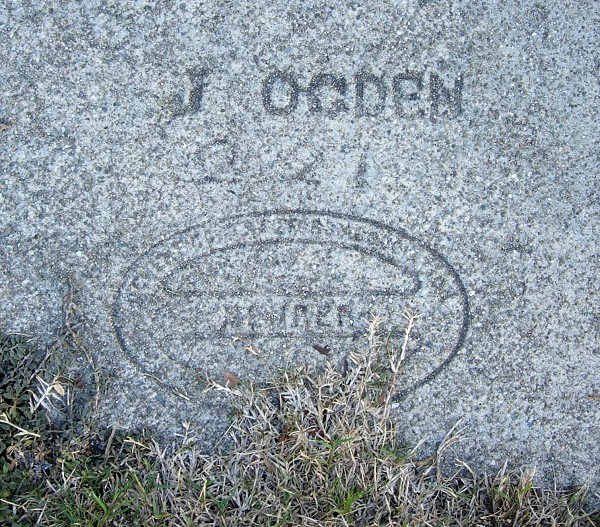
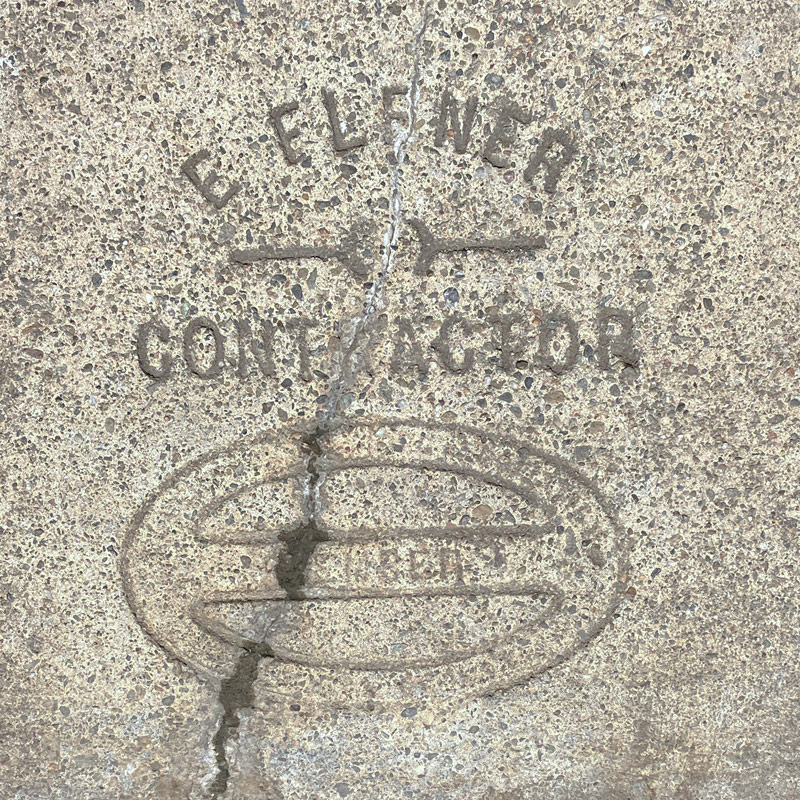
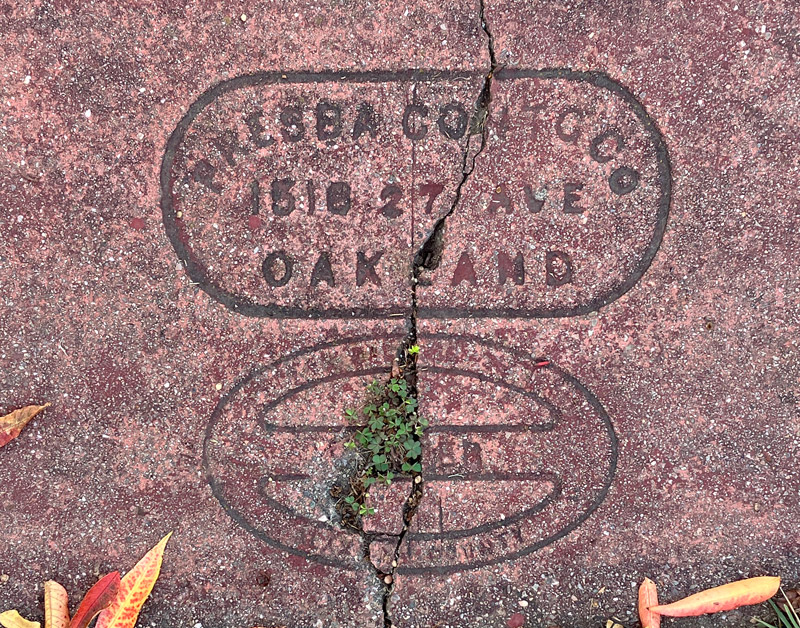
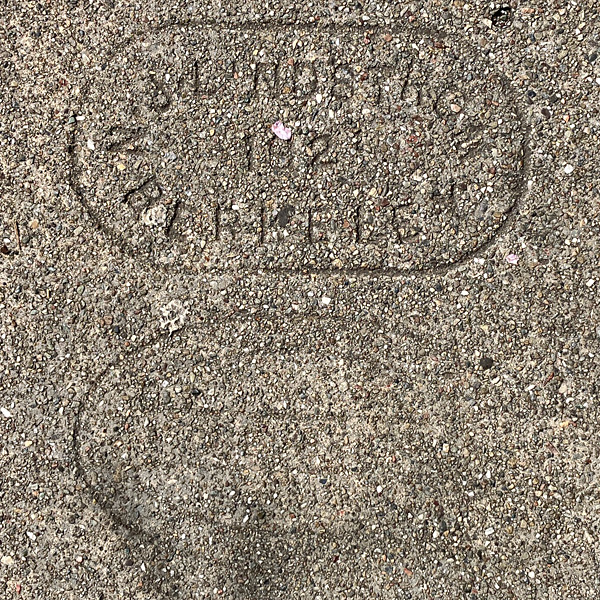
A few Oakland sidewalk marks include the distinctive oval stamp of the Cement Contractors Association of Alameda County. During my inventory I captured a few of them. I’m positive there are others, but I wasn’t documenting them. I’ll add more as I find them.

ccaac-orth

ccaac-ogden

lee-j-immel

It’s possibly coincidental that both of the dated marks are from 1927. On the other hand, the late 1920s were the high-water mark in sidewalk contracting — I counted about 110 different workers and companies active in Oakland at that time. So that would have been the best time to establish the Cement Contractors Association of Alameda County.

I think that Herman Orth tailored his odd-shaped stamp to fit the association oval. I have examples from 1925, his earliest year, as well as 1926 and 1936. For all I know, he founded the association.

“Master Concrete” holders

29 January 2016

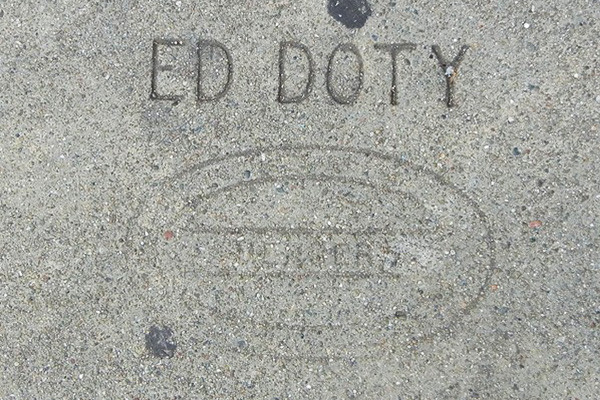
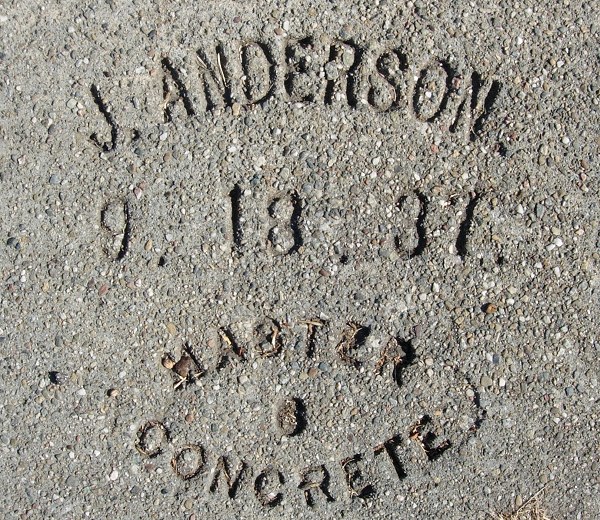
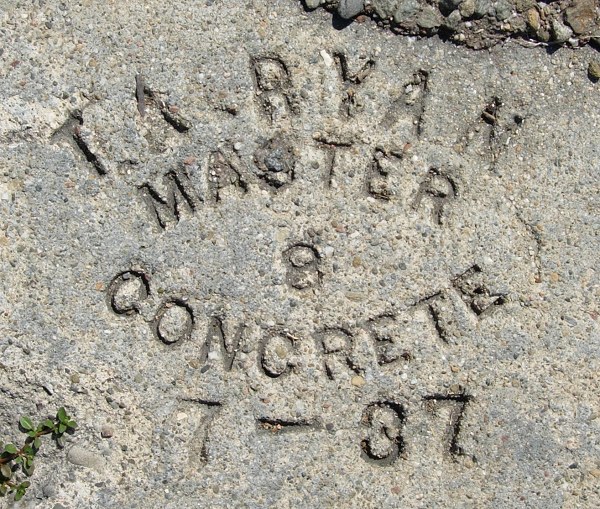
The Master Concrete designation was administered by the Master Concrete Contractors Association of Alameda County. The first appearance of the group in the papers was in 1931. A small article in the 30 September 1934 Oakland Tribune listed the members thus [with stamp numbers]:

Ensor Buel
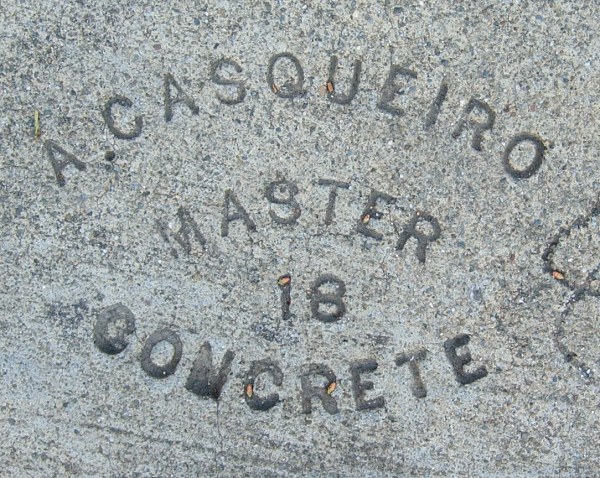
A. Casqueiro [18]
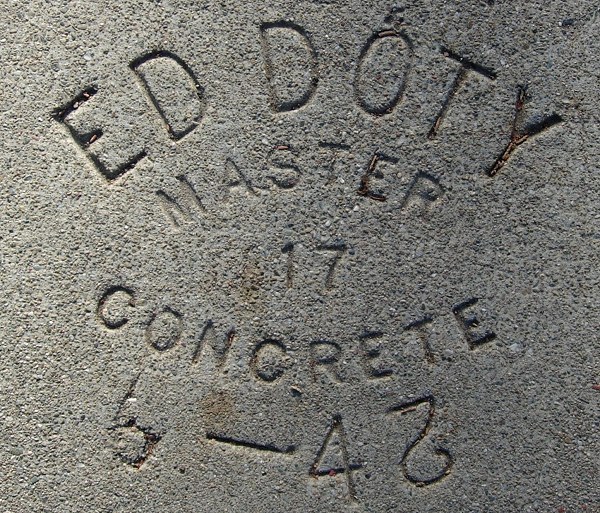
Ed Doty & Son [13,16,17]
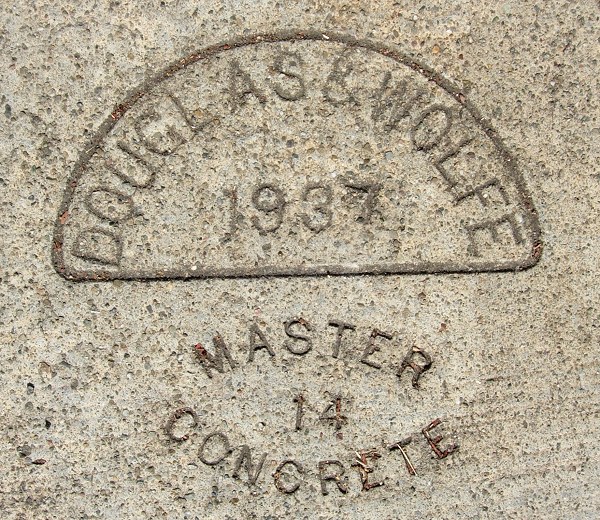
Douglas & Wolfe [14]
J. H. Fitzmaurice
T. J. Garvey
P. M. Henning
Jepsen Bros.
A. A. Johnson
Gus Johnson
J. B. Lee
N. J. Lindstrom [4]
L. Lovisone
P. M. Mortensen
C. T. Petersen
Reichel & Bredhoff
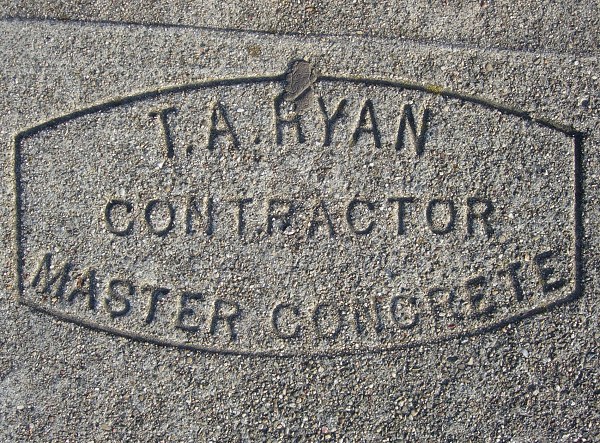
T. A. Ryan [8]
Schnoor Bros. [2]
A Soda & Son
Frank A. Stead
Geo. & Jas. Thomas
Jas. E. Wentworth [7]

NOT listed were these guys:

G. Tribuzio [1]
A. J. Marin [5]
J. Anderson [6]
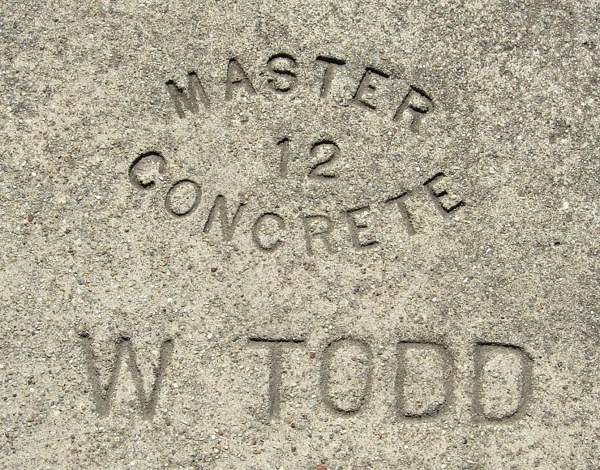
W. Todd [12]

A meeting announcement in 1937 named a few of the members listed above, plus George Prentice.

The group was politically active through the Depression and WWII years, but is last mentioned in the papers in 1946.

Although I didn’t seek out examples of each Master Concrete number, or even collate them until after my sidewalk survey was finished, I think I’ve captured all of the ones who practiced in Oakland.

Here they are, in numerical order.

masterconcrete1-g-tribuzio

masterconcrete2-schnoorbros

masterconcrete4-lindstrom

masterconcrete5-a-j-marin

masterconcrete6-anderson

master-concrete7-wentworth

masterconcrete8-ryan37

Ryan continued to use “Master Concrete” on his mark after 1937, but without the number:

masterconcrete-ryan

masterconcrete12-wtodd

masterconcrete14-douglaswolfe

Ed Doty had two Master Concrete numbers.

masterconcrete16-eddoty

masterconcrete17-eddoty

I have to say that all of these Master Concrete workers did high-quality work. It was surely a source of pride, a higher wage, and more than the usual mortification when errors were made.

masterconcrete17-eddotytypo

And the last of the series (so far anyway):

masterconcrete18-casqueiro

Between numbers 1 and 18, I’m now missing 3, 9, 10, 11 and 15. Those may have belonged to contractors in other cities. There may be more beyond 18. Must keep eyes peeled.

Updated in late 2024

Special marks: “Permission to pass over”

22 January 2016

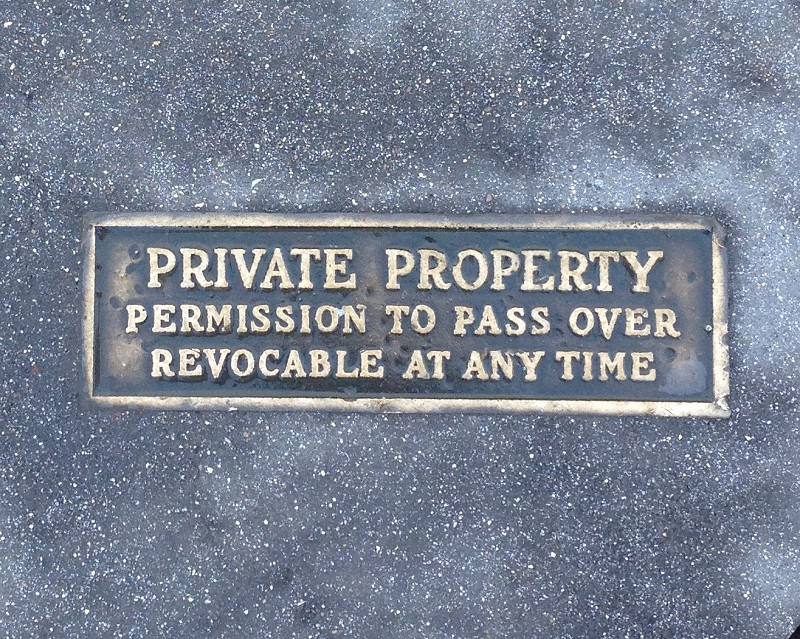
These are all over the place, but you stop noticing them because they make no sense. Several of these plaques surround the Emporium/Sears/Uber building.

uber-license

From looking at the material for an online real-estate course, I gather that property owners post these notices to prevent people from encroaching upon their rights by asserting an “easement by prescription.” Shopping malls used to claim that notices like these allow them to prevent people from leafletting, for instance. That got overturned. It seems like overkill, and unenforceable, to treat a sidewalk the same way, but then I’m not a lawyer.

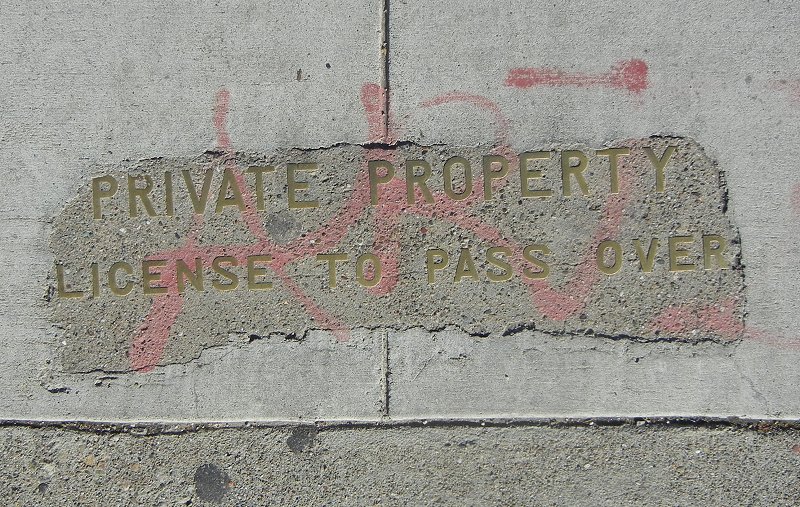
The examples I’ve seen are pretty old. Here’s one from an address on Claremont Avenue.

concrete-license

And this one’s in front of the Hutch, on Telegraph near 20th Street.

brass-license

It looks like there wasn’t a third line of text. Maybe the lawyers said this wording was sufficient. Maybe it cost too much for a skilled laborer to hand-set individual brass letters spelling out the whole notice.

Special marks: Oakland sidewalk unions

15 January 2016

The people who left their marks on the sidewalks they made in Oakland were a mix of workers. Some were individuals, and some were small businesses by today’s standards. But unions were there, too, in contention and in cooperation. The American Brotherhood of Cement Workers was the first of these.

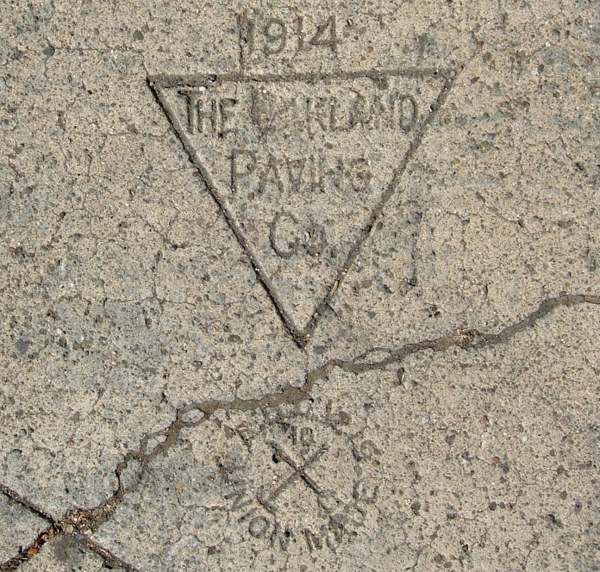
The ABCW’s stamp consisted of a pair of cement worker’s tools, crossed, inside a circle made of the words “Union Made” plus the union’s initials and the local number 19. I’ve photographed four examples in Oakland, all of them accompanying marks by the Oakland Paving Company. The one above, in Berkeley, is from 1913, the one below is from 1914, and this one is from 1913. The number 10 inside the symbol refers to the master finisher.
union-made-oakpaveco

Lincoln Cushing knows more about Bay area labor history than I ever will. His site tells how the ABCW tangled with the Laborers International Union of North America (LIUNA) in 1913. LIUNA prevailed upon the American Federation of Labor (the AFL in the AFL-CIO) to let it poach the ABCW’s members. After that, concrete workers were represented by LIUNA or by the Operative Plasterers’ and Cement Finishers’ International Association, which is now named the Operative Plasterers’ and Cement Masons’ International Association (OPCMIA). I’ve only seen the stamp of OPCFIA Local 594 on Oakland’s sidewalks. (Today OPCMIA’s Local 66 represents the central Bay area and doesn’t do sidewalks.)

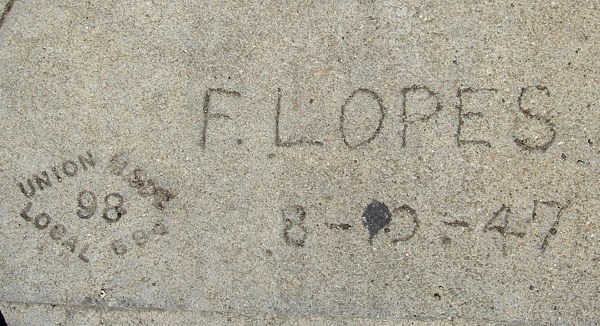
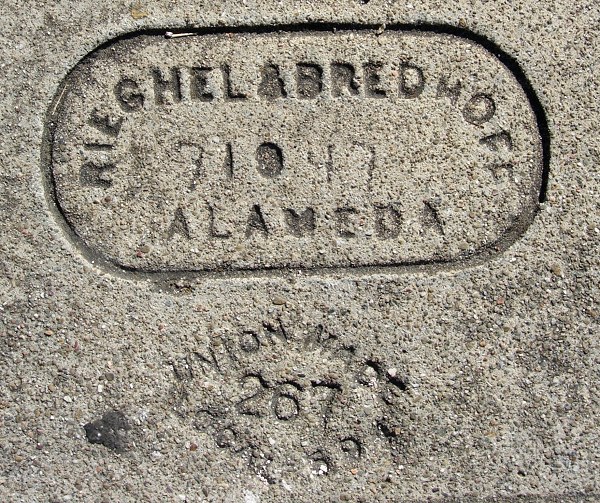
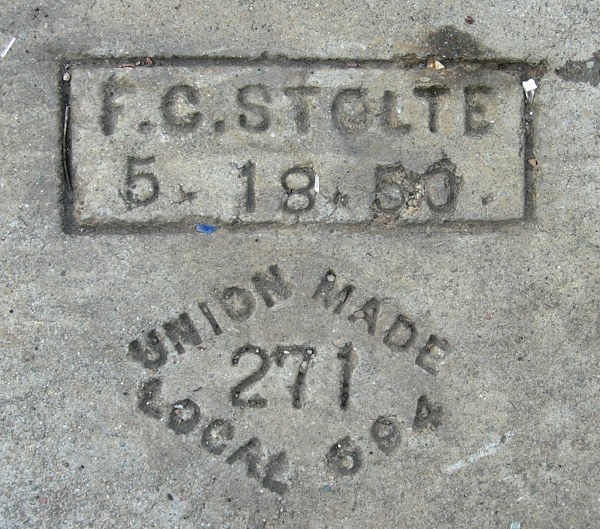
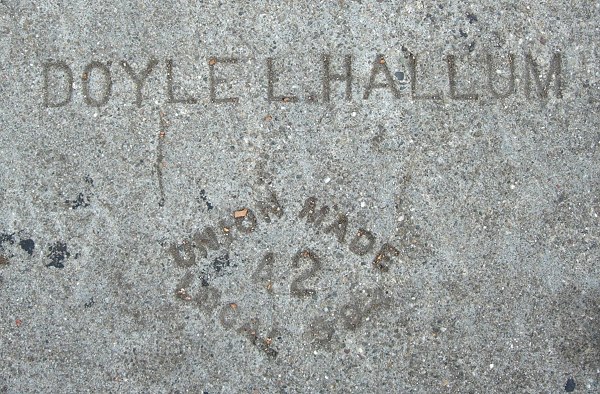
Here are seven different Local 594 bugs. The number inside is that of the master finisher. They’re mainly from the 1940s.

union-made-doylehallum

union-made-steadmanpowell

union-made-lopes

union-made-h-o-mart

union-made-somers

union-made-RnB

union-made-stolte

I did find one other union stamp. It’s somewhere in the Sheffield Village neighborhood — I no longer have the address.

union-made-shef-village

Anyone know more about this one?

I want to end with an apology for not being a better documenter of these. I usually tried to avoid photographing the union bug as I shot the maker’s stamp, so there are surely more of these out there. But I looked at all of my thousands of photos in preparing this post, and I think nearly all of the different union bugs in this city worked their way into my collection.