Animal tracks

24 June 2016

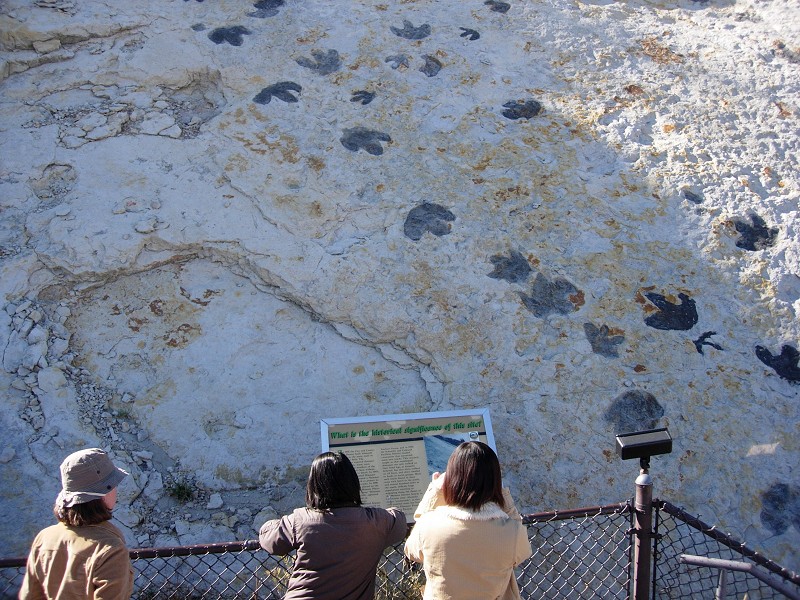
Oakland’s sidewalks contain their makers’ marks and other things besides. In that respect, they remind me of geological strata, a subject close to my heart. Throughout time — well, throughout the billion years or so since they first evolved — animals of all kinds have left their tracks on the ground, from insects to dinosaurs (shown here from Dinosaur Ridge, near Denver).

dinosaurtracks

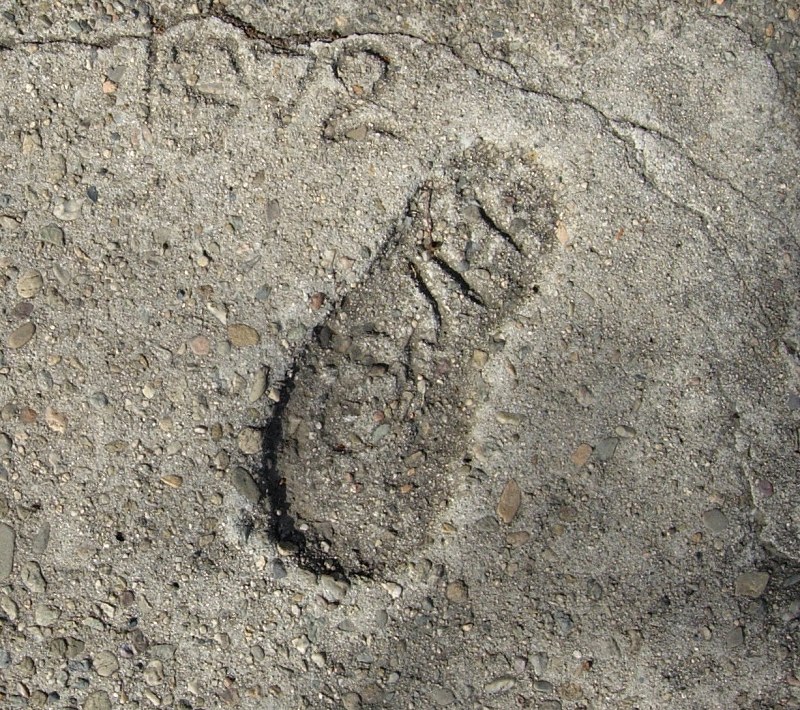
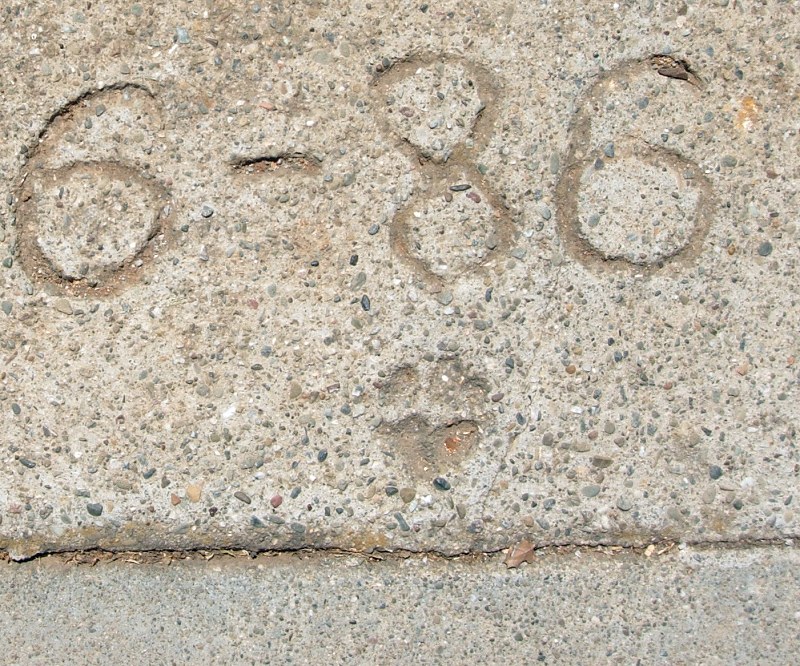
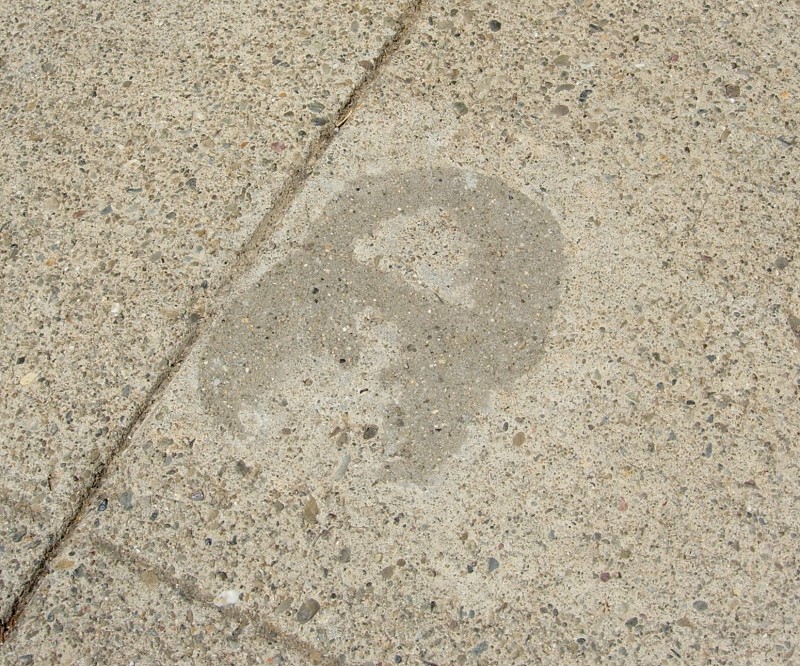
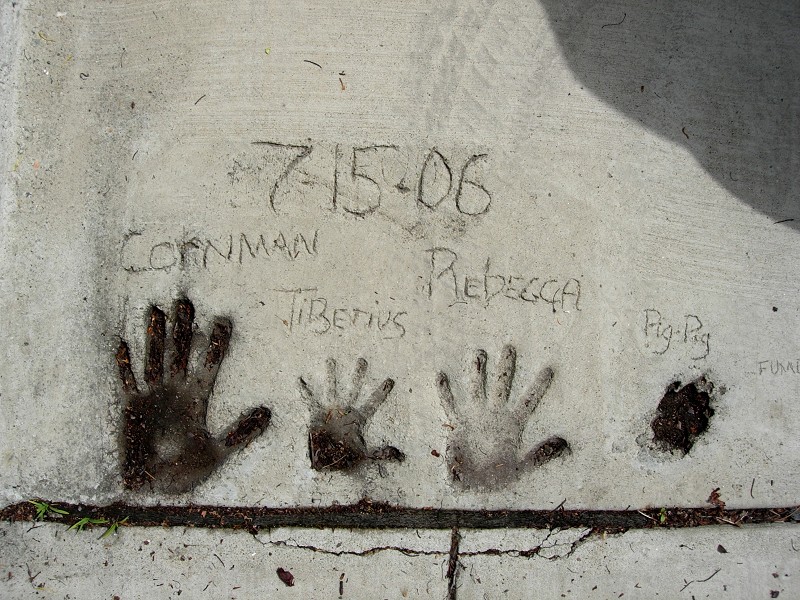
Fossil tracks are classified as ichnofossils — preserved remains not of organisms’ bones or shells, but their actual behavior. Here are some human examples from our sidewalks.

hands

feet

shoes

We understand what humans were doing when they left these signs, as surely as we know why they left dated stamps on the pavement. They were saying, in one way or another, “hello it’s me.” The other animals, like Pig-Pig above or the nameless dog below, we can guess, were forced into the act and were saying “let me go!”

dog

When these hooftracks were made, the horse and its owner were probably both displeased. Oh, and the sidewalk maker too.

hooves

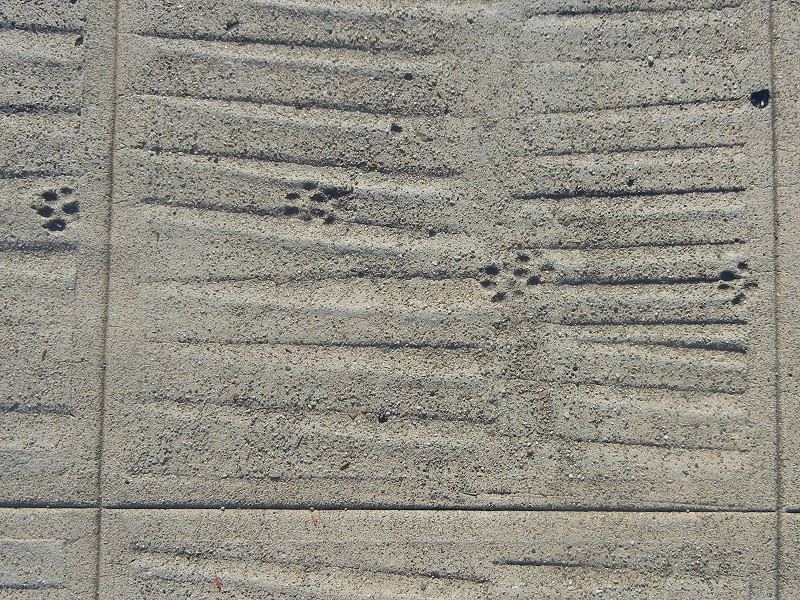
We don’t know what business this animal, a cat I think, was intent upon. But I can guess it was fed up with concrete by the time it finished licking its paws clean.

dogtracks

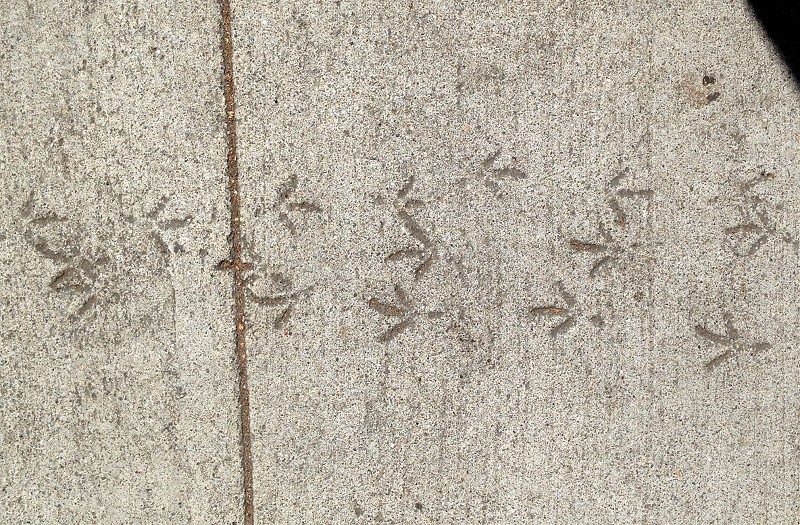
And as for the modern dinosaurs — pigeons — that left these three sets of tracks on Piedmont Avenue, they were probably doing the usual.

birdtracks

Tony Martin, a Georgia-based professor of paleontology, is fixated on trackways both ancient and modern. Check him out at georgialifetraces.com.

Vestiges of early communication companies

17 June 2016

The turn of the last century was a busy time for two competing communication technologies, the telegraph and the telephone. Amazingly, our streets still bear witness to those days.

Telegraphy was the long-established, default technology in the 1870s. Newspapers, governments, banks and businesspeople of all kinds relied on telegraphy to transmit documents and other written communications, especially for long-distance messaging by teleprinter. By the 1860s, cities like San Francisco had networks of telegraphic call boxes for top-crust suits, who could press a button in their home or office to summon a messenger boy.

The Postal Telegraph Cable Company was a nationwide competitor to Western Union until the 1940s, kind of like Apple versus Microsoft. This PTCCo access cover is at Franklin and 7th streets.
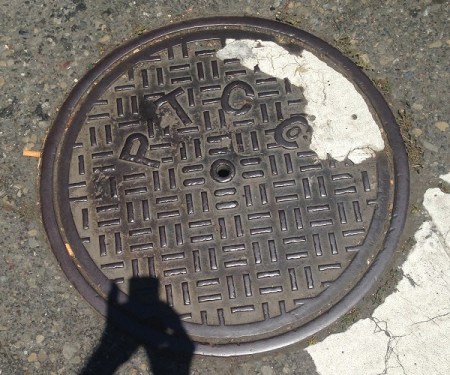
P-T-C-Co

The company was founded in 1887 as the Pacific Postal Telegraph Cable Company, in San Francisco. The “Pacific” was lopped off some time before 1908, when the business directory listed its Oakland headquarters at 1058 Broadway. It still had the name as of 1917, but eventually its name became Postal Telegraph Company. Western Union finally took it over during the World War II years (1943 or 1945 depending on the source), but telegraphs had already lost the competition with telephones.

Speaking of which, the first telephone network in the Bay area was launched in 1877 by a spinoff of Western Union. In 1880 it merged with a competitor to become the Pacific Bell Telephone Company, the ancestor of “Pac Bell.”

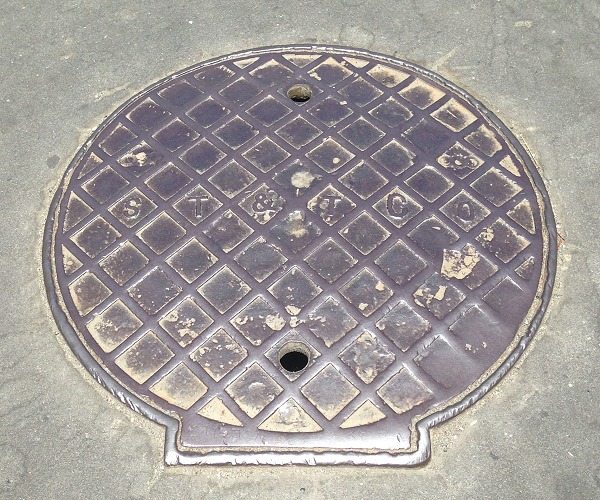
In 1883, a new company under the same management was set up to operate telephone networks everywhere in the West outside of San Francisco. At first named Sunset Telephone-Telegraph Company, it took the name Sunset Telephone and Telegraph Company in 1889. This ST&T Co. cover, with a unique scallop design, is at 6th and Franklin streets.

S-T-and-T-Co

Undergrounding of telephone lines began in the 1890s, so I think that’s the earliest this cover could be. The 1898 directory listed Sunset at 572 12th Street, and in 1908 Sunset was at 1275 Franklin Street. It had merged the year before with the Pacific States Telephone & Telegraph Company.

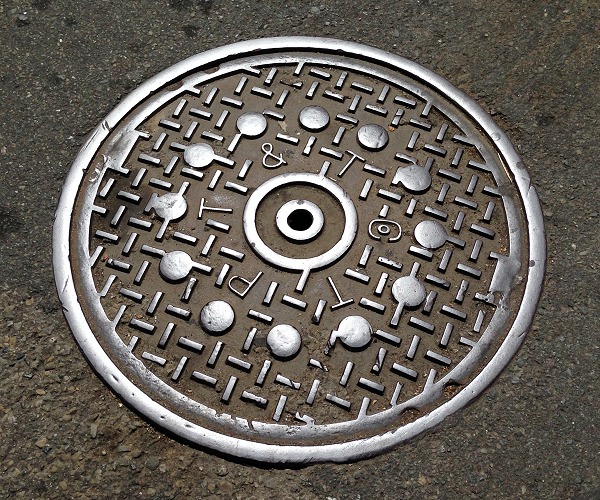
And who were they? They were Pacific Bell, reincorporated in 1890 as The Pacific Telephone and Telegraph Company and changed in 1900 to Pacific States T&T. This TPT&T Company cover is somewhere in the lower Uptown area.
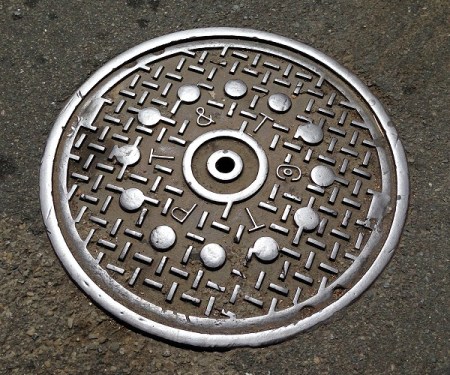
T-P-T-and-T-Co

Here’s another one I’m quite taken with.

Pacific was granted its Oakland franchise by the city in 1892, so presumably the cover dates from the 1890s.

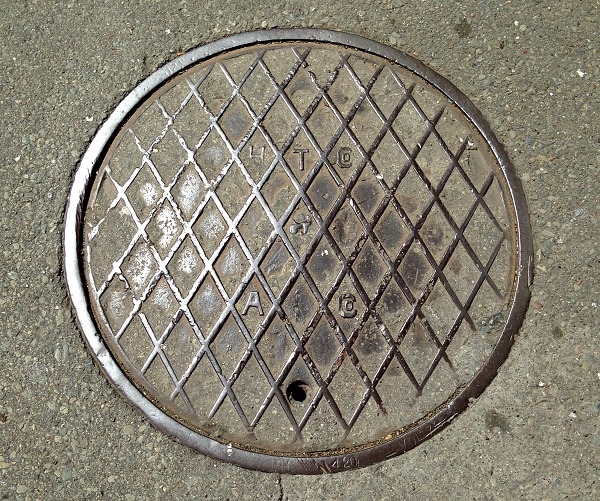
Finally, there was the short-lived Home Telephone Company, which had subsidiaries serving local subscribers in cities across the country. There was an Oakland Home Telephone Co. and a Home Telephone Co. of Alameda County, here represented by a cover on 20th Street near Rashida Muhammad Street.

H-T-Co-of-A-County

The firm was listed at 19th and Cypress Streets in the 1908 directory, while Oakland Home was at 67 Bacon Block. It was incorporated in 1905 (“one of several branch companies incorporated by the main concern”), and had its Oakland franchise granted in February 1906. Some time before 1911, the various Home Companies merged into Bay Cities Home Telephone Company. Pacific T&T absorbed it in 1912, taking over Home’s 50-year franchise.

Pacific T&T, like most other telephone companies, was really part of the Bell System. . .

. . . which itself was part of AT&T (originally the American Telephone and Telegraph Company).

The wonderful Deco office tower of Pacific Tel and Tel, known for many years as the Pac Bell building, is a San Francisco landmark to this day.
Vestiges of other power companies

10 June 2016

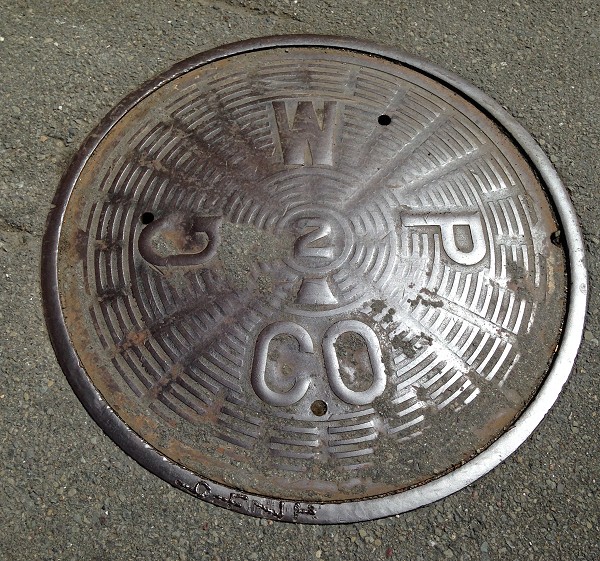
It took more than a generation for Oakland to secure today’s electric power system under Pacific Gas & Electric Company. Last week I showed you some surviving utility-hole lids from PG&E’s largest competitor in Oakland, Great Western Power Company of California. Here are two more from a century ago.
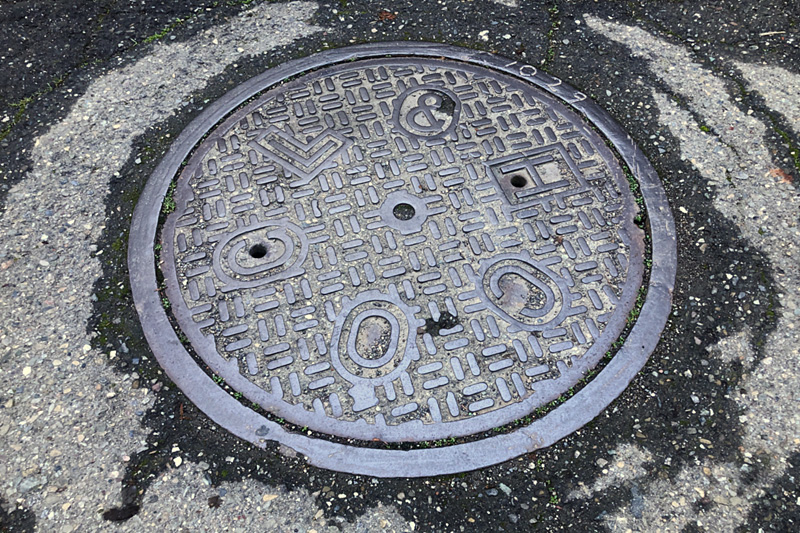
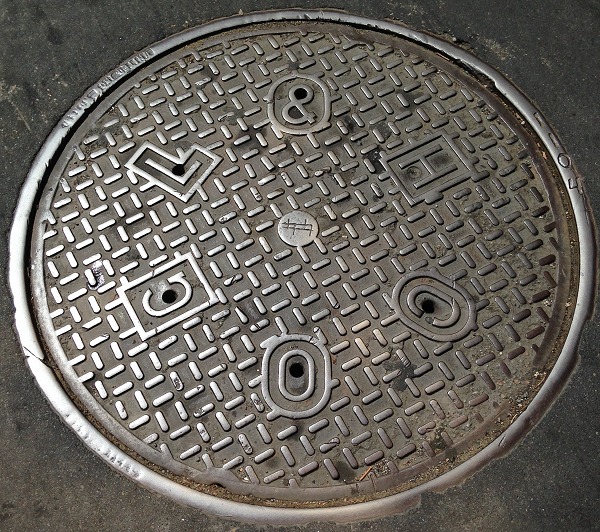
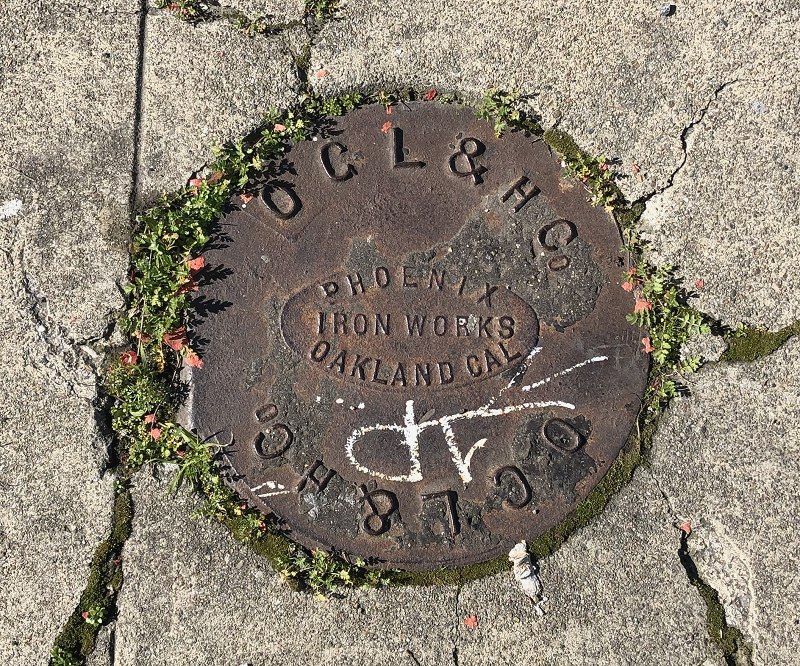
Another utility firm from those early days was the Oakland Gas, Light & Heat Company.

O-G-L-and-H-Co

The Oakland Wiki states that the company took this name in 1884, having previously used several variants of Oakland Gaslight. It’s listed by that name in the 1898 and 1910 business directories, with headquarters at 13th and Clay streets. Unfortunately I don’t have a precise recollection of where this lid is; roughly Jefferson and 18th streets. But I’ve seen several.

For a time, there was also the Berkeley Electric Lighting Company. I think that’s the firm behind this lid.

B-E-L-O

Originally the Berkeley Electric Light & Power Company, it was listed in the 1898 directory under the name Berkeley Electric Lighting Company at 2110 Center Street, Berkeley. In 1908 it was listed at 2225 Shattuck Avenue, but by then it was formally a branch of the Oakland Gas, Light & Heat Company. The odd shapes in this lid may represent the initials that got removed when the company changed its name. I’ve seen a couple of these.

Incidentally, since last week’s post I’ve found more Great Western Power Co. lids in Franklin Street as far down as 11th Street. It’s not always easy to check these things in the middle of the street!

Vestiges of the Great Western Power Co.

3 June 2016

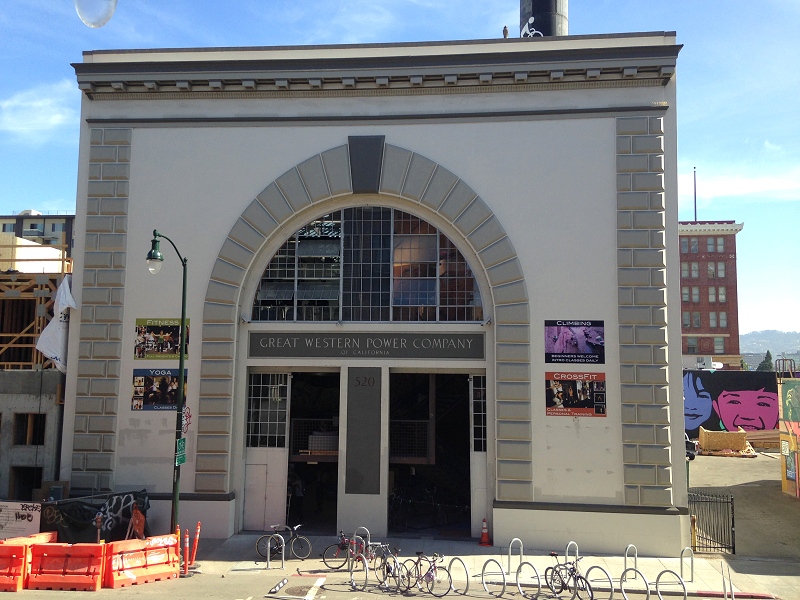
When I first moved to Oakland, I knew this building on 20th Street near Telegraph Avenue as Navlet’s, part of a small chain of nurseries. (Today it’s a popular climbing gym.) Its huge smokestack, I figured, must be related to processing shredded bark and other ground covers. But it was originally the power plant that generated electricity for Oakland’s Great Western Power Company. Great Western merged with Pacific Gas & Electric in 1930, but its signs remain in our downtown streets.

GWPCo-bldg

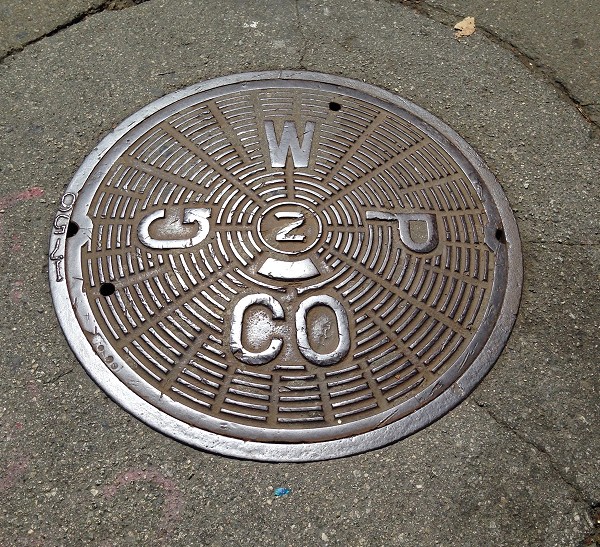
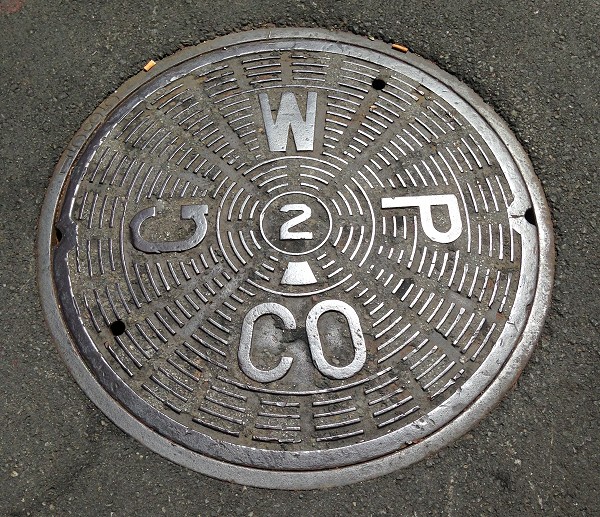
The old Great Western power lines are PG&E property today, but PG&E didn’t replace the utility hole covers. I’ve photographed over a dozen of them all around the old power plant. This is what most of them look like.

GreatWesternPowerCo

The details matter. The predominant lid design features two holes, two notches in the rim, and a wide “mustache” above the letters “CO”.

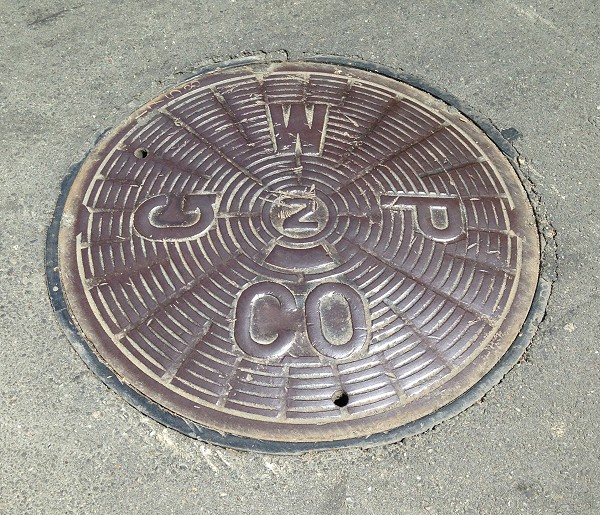
Another configuration eliminates the notches, and all of the features look fatter.

webster-at-grand

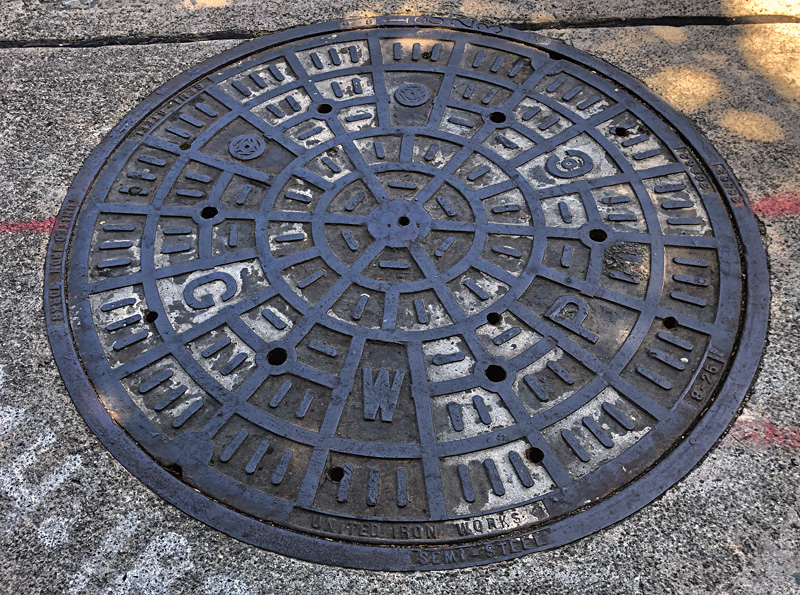
There’s a third configuration with several differences, the most obvious being a small mustache. It’s more elegant overall, and I suspect that it came later.

webster-near-20th

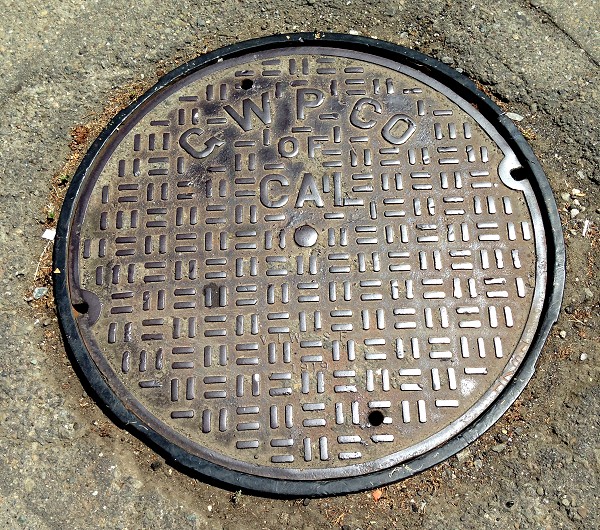
The fourth design evokes the complete name, “Great Western Power Company of California,” that appears on the power plant itself. I’ve only seen two of these.

18th-near-sanpablo

Elsewhere around town there are examples of this configuration seen on Ivanhoe Street.

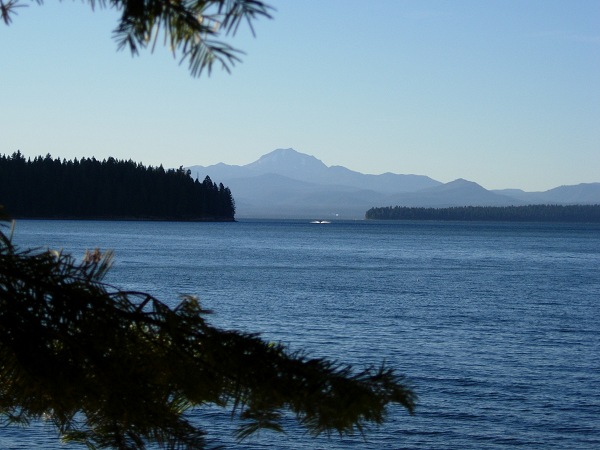
At its peak, the Great Western network, under the leadership of Mortimer Fleishhacker, extended all the way across California. Starting in 1908, the company dammed the Feather River at Big Meadows to create Lake Almanor reservoir, given its name for Alice, Martha and Elanor — the three children of the company’s vice president, Oakland lawyer Guy Earl.

almanor
Lassen Peak and Lake Almanor, 22 September 2006

More dams and turbines were built along the Feather River to generate electricity in a mighty “stairway of power.” The power lines ran from there all the way to Oakland.

The colorful origin story of Great Western in 1905, and the colorful story of how Great Western invaded PG&E’s market in the Santa Rosa region in 1912, are both well told on the Comstock House website.

In another remnant of the once-great firm, the Great Western Power Trail in El Cerrito runs where a substation once supplied electricity to the Hutchinson Quarry (presumably part of the Hutchinson construction empire that left its sidewalk stamps all over Oakland).

I’m thinking that these covers survive in other places outside Oakland.

These lids are tough old hombres that have stood up to generations of traffic, but they do have limited lives. Several on 20th Street, and another right in the middle of Grand and Broadway, look more like this.

20th-and-RashidaMuhammad

Some day, PG&E will have to replace them with their own branded lids, which are also interesting and attractive. I hope someone at that gigantic company is a historian who, in collaboration with the city’s heritage community, will see to it that some of these old lids are preserved.

Human errors

27 May 2016

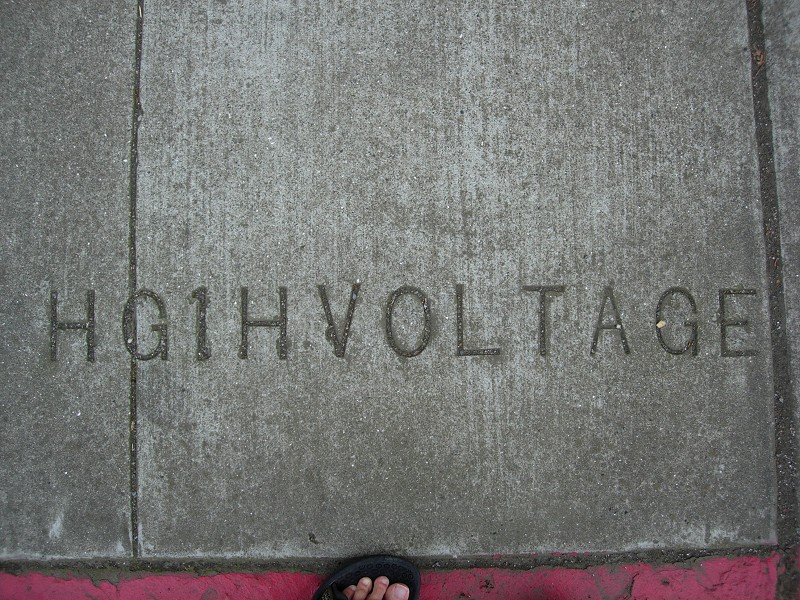
A sidewalk stamp is a proclamation of the maker’s skill, an inscription literally made in (artificial) stone. But as every copy editor knows, mistakes can escape the most stringent quality checks. I’ve found misspellings on the very spine of a book. Here are some I’ve found on Oakland’s sidewalks.

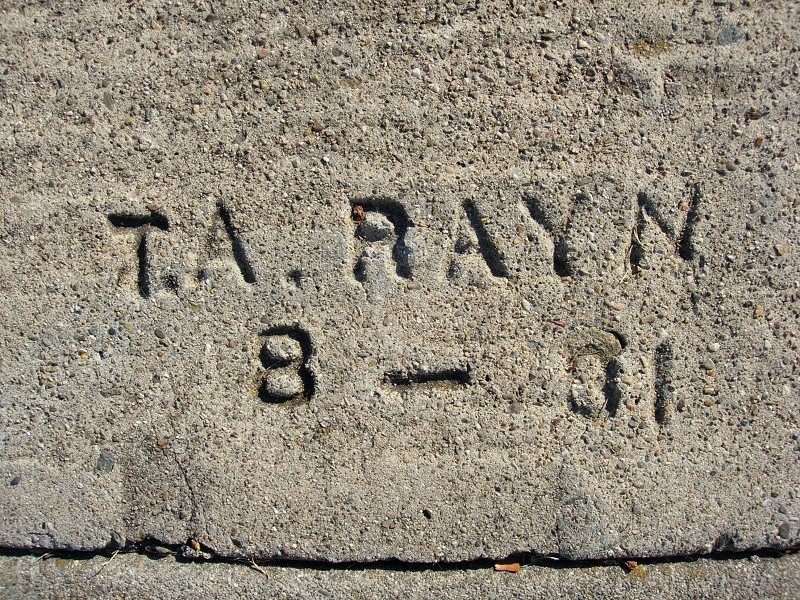
Some concrete workers set their marks a letter at a time. I know this from the errors they made, like this one by T. A. Ryan.

misspell-2

Or this anonymous mark by the fire station on Martin Luther King at 17th Street.

misspell-3

More typically, a concrete contractor would have a stamp cast in bronze; see Louis Lambretti’s original stamp over on the Sidewalk Secrets blog. Having a stamp made was an important business decision that must have been a pricey deal, one that involved appointments with a metalsmith to settle on the design and text. I assume that if the contractor or the fabricator was fooled by the reversed text, the stamp sometimes came back from the foundry with a harmless mistake.

The earliest example I have is the pair of reversed letters on the Oakland Paving Company’s first stamp.

misspell-1

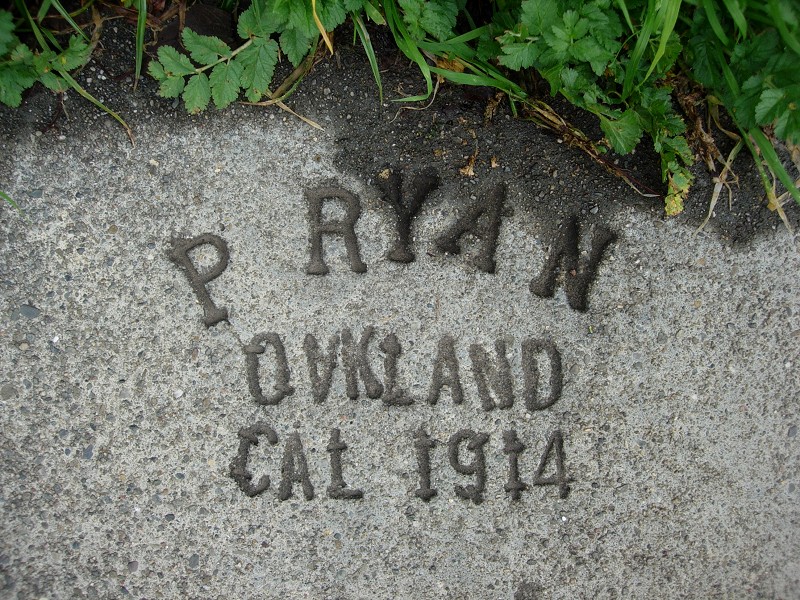
Patrick Ryan put up with this particularly sloppy stamp that included an inverted “A”.

misspell-4

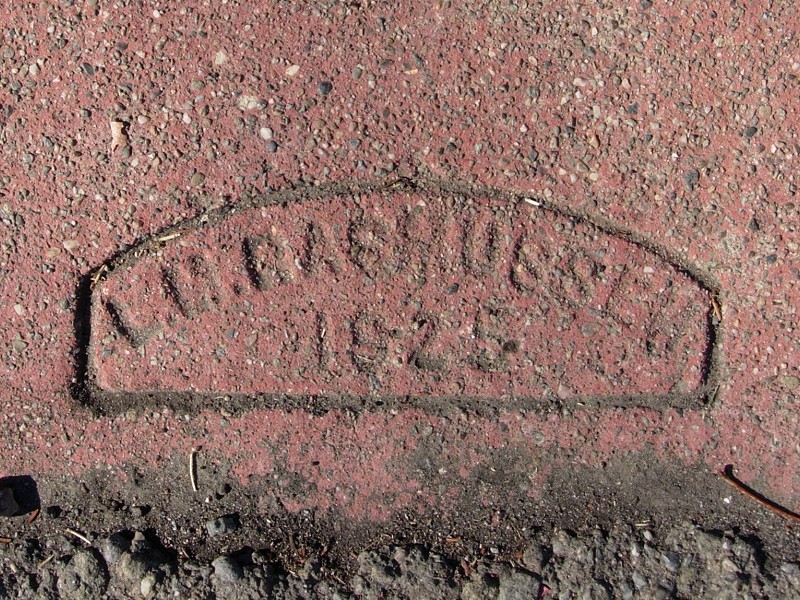
Laurits Rasmussen never did have the reversed “N” on his stamp fixed, but it’s rarely even visible.

misspell-7

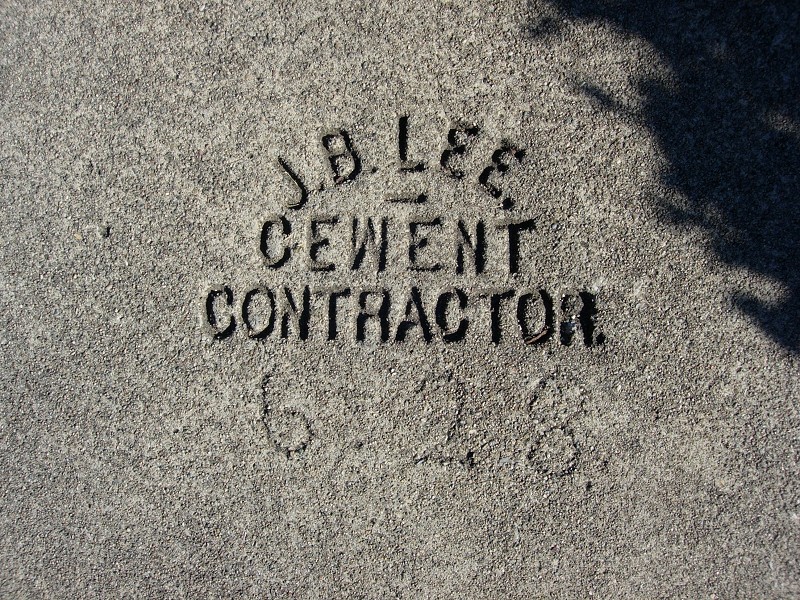
The error in James B. Lee’s stamp was more glaring, but he kept using it.

misspell-5

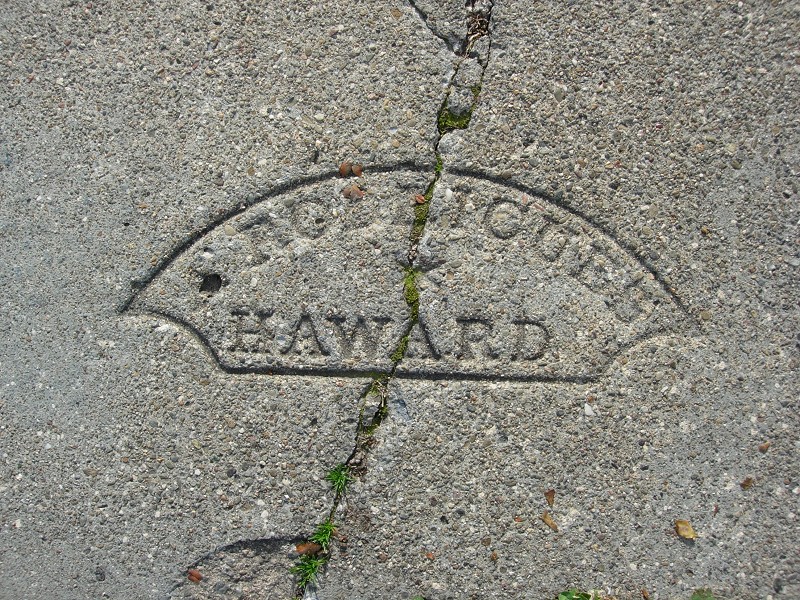
And it didn’t seem to bother A. Rodrigues that his city was spelled wrong.

misspell-6

But Lazzero Banchero had no choice but to reject his fabricator’s cockup. It’s conceivable that he didn’t notice until the first job he tried to stamp. All I know is that there’s only this one example in Oakland.

misspell-8

Some people just have trouble seeing letters. In earlier times we used to call them slow or stupid. As we all know today, you can be dyslexic and still be smart and successful, doing jobs like metalsmithing and concrete finishing that usually let you finesse your weakness. But you do have to take extra care to get things right. And if there are two dyslexics in the chain of fabrication, all bets are off.

Fortunately, today stamps are made cheaply of silicone rubber, and concrete is very predictable allowing mistakes to be troweled over. Both factors have made errors very rare . . .

2015b

but not impossible.

Oakland Gaslight Co. and its successors

20 May 2016

oakland-gaslight-co

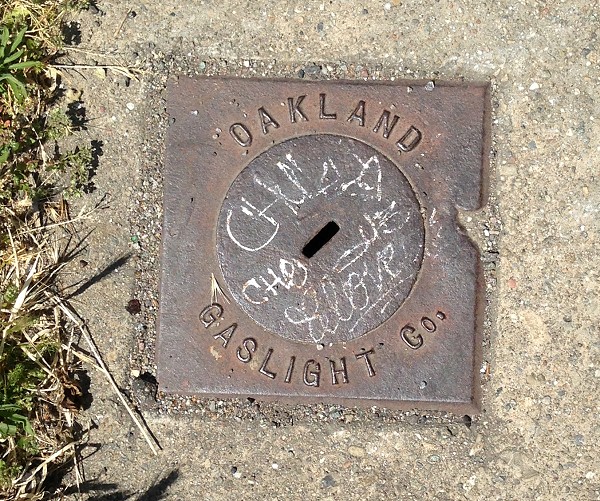
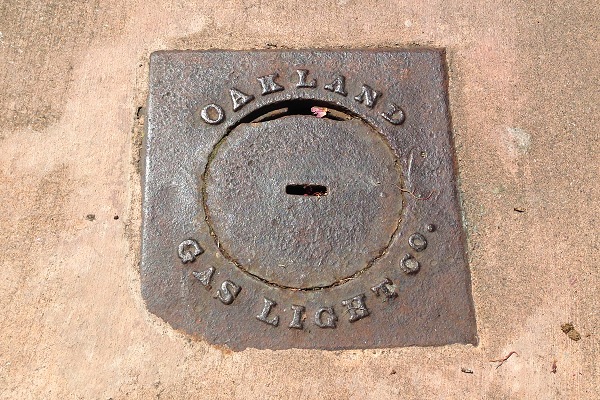
In Oakland, most of the metal underfoot is the product of a few companies, and I haven’t made a practice of documenting it. But on the 3600 block of Martin Luther King Way, this caught my eye. It’s surely well over a hundred years old.

Incorporated in 1866 as the Oakland Gas Light Company, this firm built its gasworks on the north side of Broadway, between 1st and 2nd Streets, and set up lamps along Broadway up to 14th Street and several blocks on each side. The city paid 22.5 cents per night for each lamp. The company merged out of existence in 1903.

I found this ancient lid from the original “Gas Light Company” in Piedmont, at 250 Sheridan Avenue. It must be the oldest object in Piedmont.

oakland-gas-light.jpg

Here’s a fixture on Alice Street around 9th Street from the firm’s days as the Oakland Gas Light and Heat Company.

This full-sized access cover is on 24th Street near Harrison. There’s another with considerably more wear on 11th Street next to the courthouse.

And this different version is at 6056 Chabot Road.

In Frank Ogawa Plaza, under the oaks north of City Hall, is a pair of covers from Oakland Gas and its successor PG&E.

Finally, I recorded an access cover with the same name in another post.

The Annual Report of the Secretary to the Board of Regents, University of California, for 1883-84 records dozens of payments to this company. Other references pop up from the 1870s. The company changed names a few times, grew, merged, and eventually became part of today’s PG&E.

The Oakland Wiki has a little more about the company.

Union concrete masters III

13 May 2016

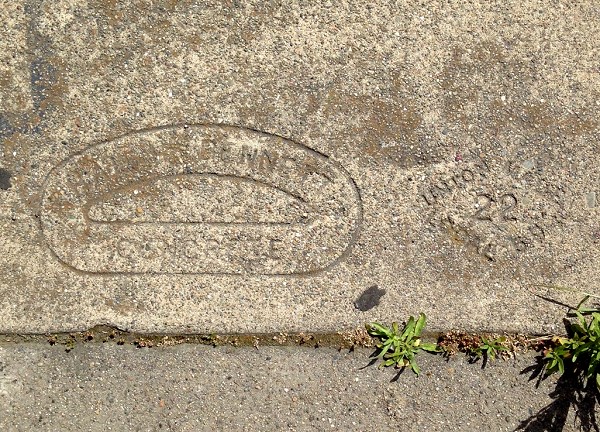
I’ve rustled up a few more numbers in the OPCFIA union bug since the last batch I posted.

union-made-bennett-22

union-made-duffin-25

union-made-fitzmaurice134

Not much to say about these. Hal Bennett’s marks (very few of which are dated) run from 1930 to 1950. L. B. Duffin marks run from 1944 to 1947. And the Fitzmaurice mark II runs from 1926 to 1941.