Archive for the ‘Special marks’ Category

1939 – WPA (Dimond Canyon)

16 June 2017

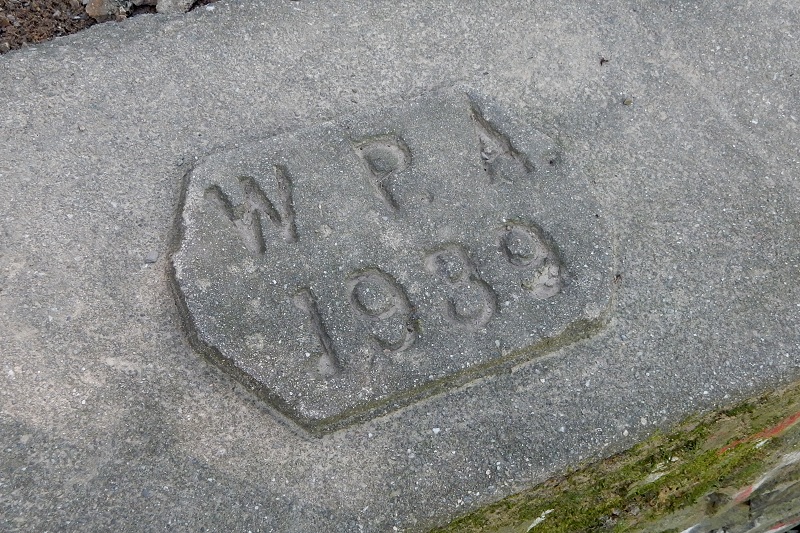
The Works Progress Administration employed hundreds of thousands of people during the Great Depression. A lot of those works involved concrete, and many well-made sidewalks and gutters around Oakland bear the “WPA” stamp from 1939, 1940 and 1941.

In Dimond Canyon, WPA projects were funded to remove landslides, build fire trails and run a sewer line down the bed of Sausal Creek. Finally, the WPA paid crews to put in a bunch of concrete channels and culverts for flood and erosion control. That was in 1939.

A lot of that work has been undermined by erosion. Eventually the stream will have its way again, unless the authorities find a need there and fill it again.

Old concrete in the West Bay

23 December 2016

Since this is a cleaning-up period at the end of the year, I’ll feature a couple of photos I’ve had for a long time and get them off my mind.

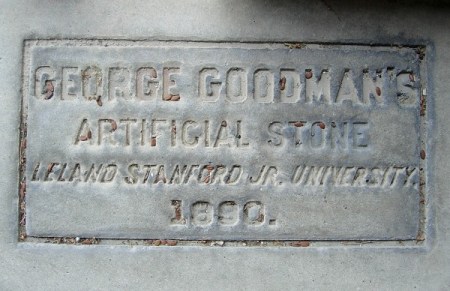
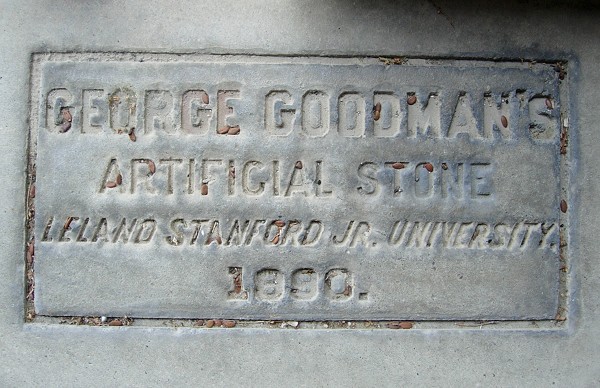
If you’ve been to the Quad at Stanford University, you may have noticed the excellent concrete walkways there. They date from the construction of the buildings in 1890 and were made by the same George Goodman, of San Francisco, whose lovely escutcheon stamp I featured here the other month.
goodmans

Goodman listed himself in the business directory as a specialist in the Schillinger Patent method, which wasn’t really about concrete per se but about making sidewalks in a way that would help keep them from breaking up. The next photo, though, is about concrete itself.

If you’ve been to the Conservatory of Flowers in Golden Gate Park, you must have noticed the vintage pavement there. Its age is uncertain, but probably from before 1900. The Granolithic Paving Company was listed in the 1887 business directory at 422 Montgomery Street, San Francisco.

granolithic

Peter Stuart, a Scot, invented granolithic concrete in the 1830s. It’s an extremely strong material, the Gorilla Glass of concrete, made by an ingenious method that lays down a surface layer, or screed, of concrete densely packed with finely crushed granite or similar rock. At the correct point in curing, an absorbent blanket is placed on the concrete to reduce the water content, raising its strength. (Low water content was one reason ancient Roman concrete was so strong.) Stuart’s granolithic method was patented in this country, as the stamp says, in 1882. The company that bore his name stayed in business until 2012.

While you’re there, walk south to John F. Kennedy Drive and visit the Alvord Lake Bridge, the first reinforced concrete bridge built in America.
Land and Water Conservation Fund plaque 2: Central Reservoir Park

9 September 2016

centralreservoirparkplaque

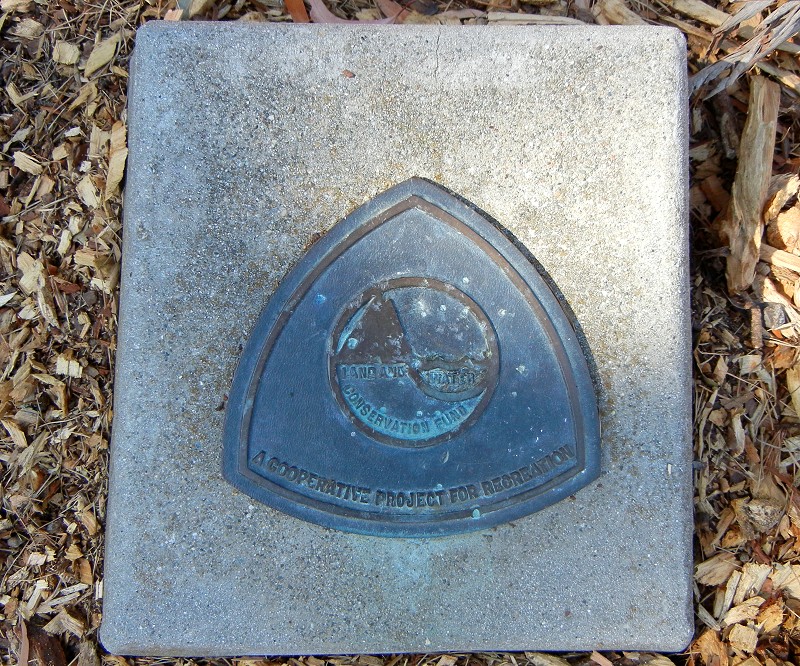
When I featured a Land and Water Conservation Fund plaque here a few weeks ago, I had a nagging feeling I’d seen one elsewhere, and there it was in my photos from March 2013. Oakland’s second LWCF site is tucked away next to the covered Central Reservoir, which I wrote about a few years ago in Oakland Geology. With a total of $70,000 from the fund to acquire 4 acres and help develop it, the Central Reservoir project took shape in the early 1970s. That may account for the maturity of the palm allee leading in from East 29th Street — or more likely a suburban estate once occupied this spot.

centralreservoirparkallee

The park is small but well equipped for kids’ teams to play daytime softball and soccer. It also has picnic tables, bathrooms, a basketball court and views of the steel-roofed reservoir.

centralreservoirparkview

I’m glad they left a plaque behind. As the podcaster Roman Mars says, always read the plaque.

A Potter Built Home

2 September 2016

potterbuilt

I came upon this mark by a house somewhere around 90th Avenue and Thermal Street last year. Gene Anderson, one of the ever-helpful guys behind the Oakland Wiki, sleuthed out the identity of Potter: Arthur W. Potter, who operated the California Mission Realty Co. in Oakland on High Street during the 1920s. In the 1923 directory he was listed as a carpenter living on 41st Avenue; in 1925 he had started the company and lived in Berkeley. By the 1950s he was in business with two of his sons, Irving and Harvey, in Castro Valley as A.W. Potter and Sons.

A 1926 advertisement referred to “Potter Built Homes,” built with “oodles of built-ins, hardwood floors throughout, tile sink and bath, the latest in home construction.” Buyers could pick their own paint, wallpaper and electrical fixtures while their house was being built. This custom sidewalk stamp is another sign of the pride and care Potter must have taken at the time, during Oakland’s wave of expansion after World War I.

This is the only such mark I’ve found in Oakland, and I’m not sure it still exists. Nor do I know if others survive in San Leandro or points south. Red concrete was in vogue during the 1920s and 1930s.

Land and Water Conservation Fund plaque: North Oakland Regional Sports Center

12 August 2016

Land and Water Conservation Fund

This plaque sits discreetly by the entrance to the North Oakland Regional Sports Center at 6900 Broadway, where countless drivers pass on their way to jam up Route 24 or Tunnel Road.

The Land and Water Conservation Fund is a federal program that redirects offshore oil and gas revenues to other ends. Its website notes that it “was [my emphasis] a bipartisan commitment to safeguard natural areas, water resources and our cultural heritage, and to provide recreation opportunities to all Americans.” Both of our Senators and 37 of our 53 Representatives signed this year’s “Dear Colleague” letter supporting the program. One of them was a Republican.

This land was acquired and developed using LWCF funds between 1977 and 1985. Let’s assume the plaque was installed in 1985.

Bay City Iron Works

26 February 2016

baycityironworks

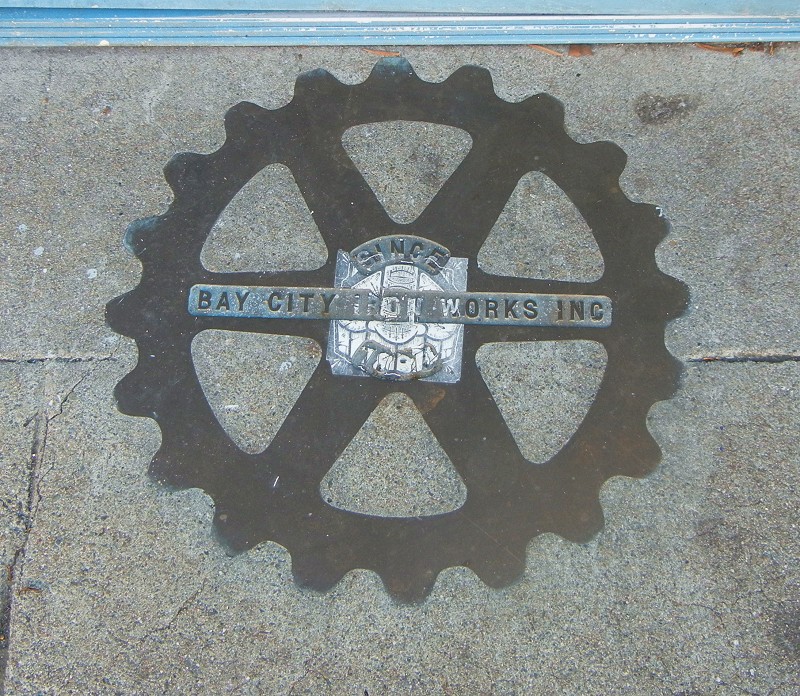
Oakland has many old businesses that have left their mark on the pavement. This marker for Bay City Iron Works is at 475 4th Street, a building that houses Ion Cars today. But the marker says, “Since 1885.” Perhaps this was its first home.

If you look up the company’s name today, Google points you to an empty lot at 2897 Chapman Street, in Jingletown. But the company’s earlier home was near the docks, at the corner of 3rd and Washington Streets (221 Washington). See this family biography of Harry Melville Thornally, who used to work there, for photos and letterhead of the place. In The Iron Age issue of October 3, 1901, the firm is reported to be in the process of building it. Today the sign on the building says “Parker Electric Mfg. Co.” I’m not sure what this website has to do with it, but check it out.

Alameda County, the Eden of the Pacific; the Flower Garden of California (Oakland Tribune, 1898) says of the firm, “The enterprise is located at 521 to 525 Third Street. It turns out all kinds of agricultural work, general jobbing in machine work, threshers, machine engines with straw-burning boilers, and irrigating pumps of the M. B. Schutzell design.”

The Lyon building

12 February 2016

As you walk up Broadway past the old Saw Mill building, you might notice two bronze letters in the sidewalk spelling out the word “NO.” That’s because you’re looking at it backward. Things make sense at the building’s main entrance, where a large stone/concrete lion with a dozen layers of paint looms over the door and the word “LYON” is spelled out in metal.

LYONsign

With that in mind, you can set out downhill from the doorway and see the letters rightly as the second half of LYON.

LYON-ONsign

Or go uphill instead to see their counterpart. I have to assume that both of these once had four letters.

LYON-LYsign

The building began in 1916 as Lyon Moving & Storage. It was quite grand, in the old Oakland style. Today, there are 53,000 storage companies in America, most of them quite bland and not a single one, I’m sure, with its name on the sidewalk in bronze.