
5659 Snake Road
These are everywhere, of course.
5659 Snake Road
These are everywhere, of course.
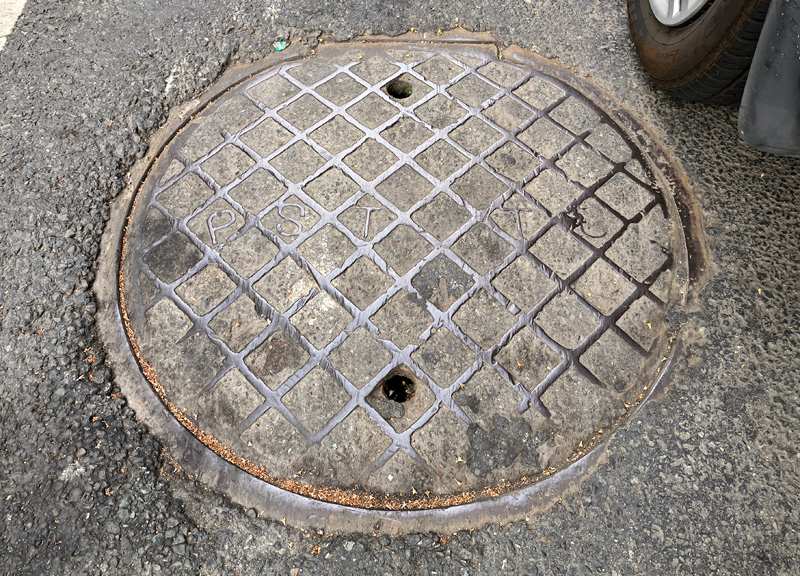
Clay Street near 16th Street
The Pacific States Telephone and Telegraph Company existed between 1900 and 1907; before that it was The Pacific Telephone and Telegraph Company and after that it was the Pacific Telephone and Telegraph Company (“The” was taken out of the name). Background in this post.
This access cover, with its rare scallop design (others are here and here), seems to always have a vehicle parked on it. Today I finally got a decent look at it.
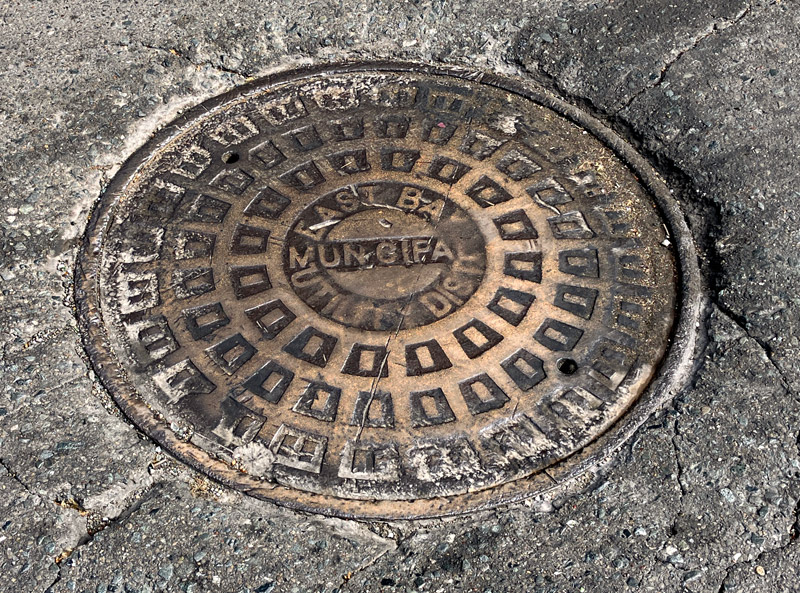
Grand Avenue was closed off today for the 4th of July, giving me a chance to inspect the roadway. This classic access cover near Embarcadero appears to be bronze.
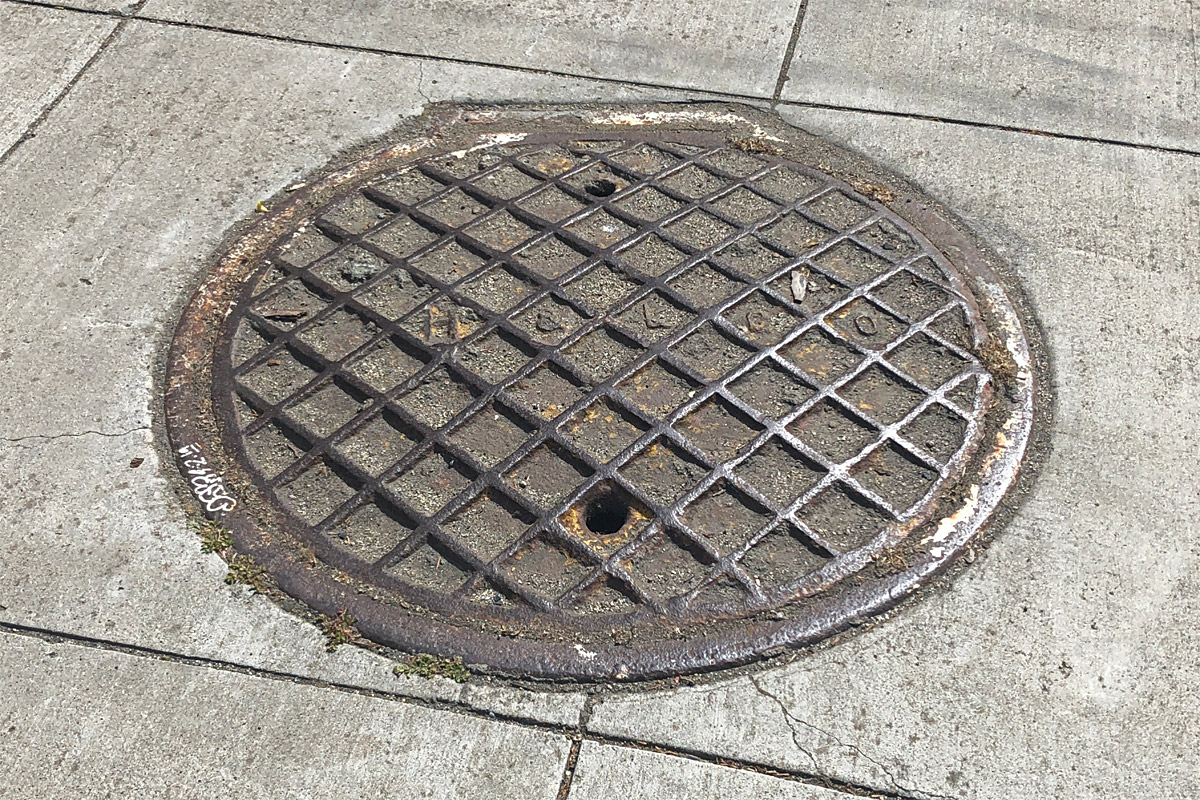
2nd Street at Castro Street
This is a mystery access cover. The site is where Oakland’s original gas works was located, back in the 1800s. As I understand it, they manufactured gas by roasting coal in those days. “H & L Co” stands for “heating and lighting company,” but I expected this to have an “O” for Oakland, like the later Oakland Gas, Light and Heat Company.
The other odd bit about this lid is its scallop design, attested in only one other place, the ancient Sunset Telephone & Telegraph Company lid on 6th Street.
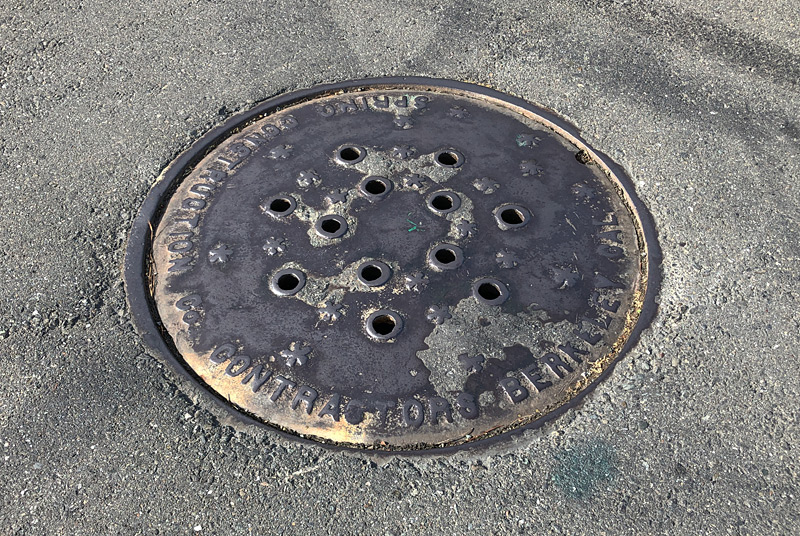
19th and West Streets
I think this may be the notorious people who made a mess of things in Berkeley.

38th Avenue and Redding Street
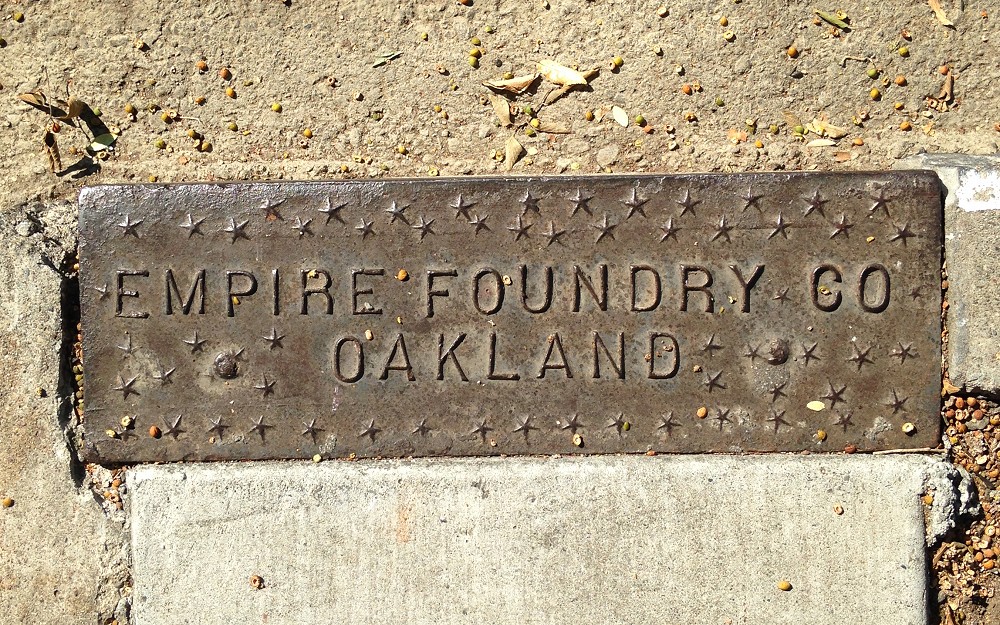
An unusual configuration from Empire Foundry.
While I’m at it, here’s a street drain plate from Empire. Don’t know where this is, because I’ve had the photo lying around for a long time.
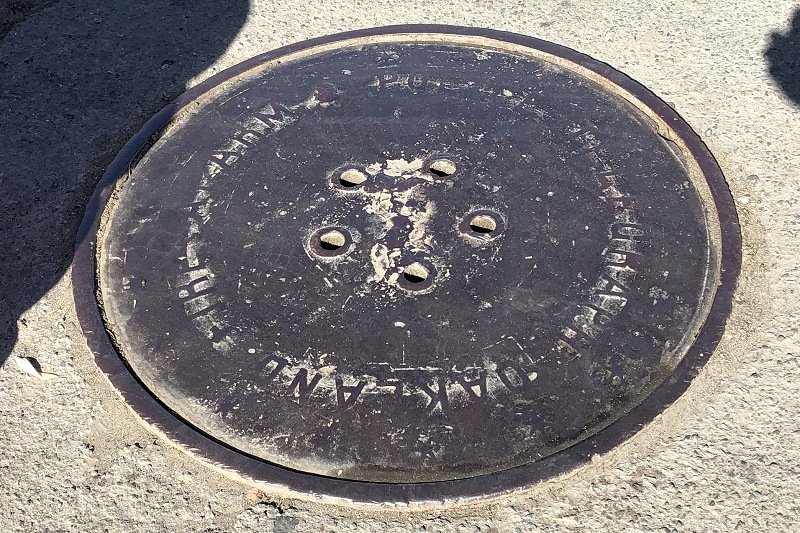
437 25th Street
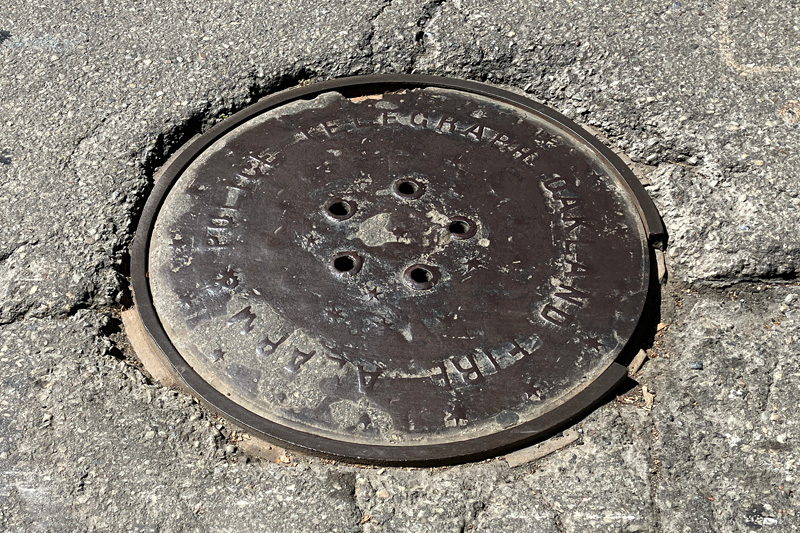
14th Street at City Hall
The Fire Alarm Police Telegraph system was the cutting edge of public safety a century and a half ago. It was a wired system that connected battery-powered alarm boxes to transmit alarms instantly across a city. San Francisco had such a system in 1865, described in a history on the S.F. City Museum site. The 1906 earthquake led to complete upgrades in this system. San Francisco dedicated its new Central Fire Alarm Station in 1915, but Oakland was ahead of that city, having finished its fire alarm police telegraph system in 1911. A main building at 13th and Oak Streets was connected by underground cables to police stations and call boxes and fire stations across the city. “With its isolation, fire-proof construction and underground system of cables,” the Tribune reported, “the entire city might burn or be shaken to pieces by earthquake and the operation of the system would not be disturbed in the least.”
These access covers date from that time and belonged to that system.

