When I first moved to Oakland, I knew this building on 20th Street near Telegraph Avenue as Navlet’s, part of a small chain of nurseries. (Today it’s a popular climbing gym.) Its huge smokestack, I figured, must be related to processing shredded bark and other ground covers. But it was originally the power plant that generated electricity for Oakland’s Great Western Power Company. Great Western merged with Pacific Gas & Electric in 1930, but its signs remain in our downtown streets.
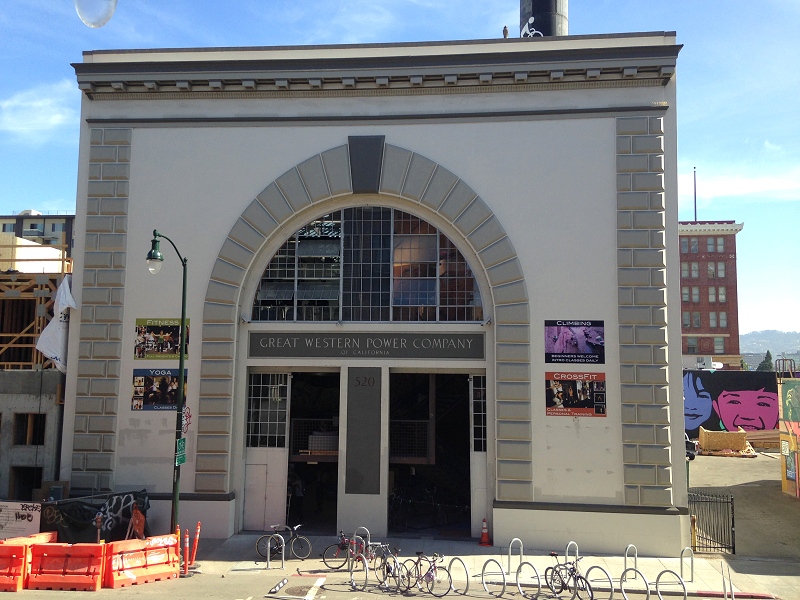
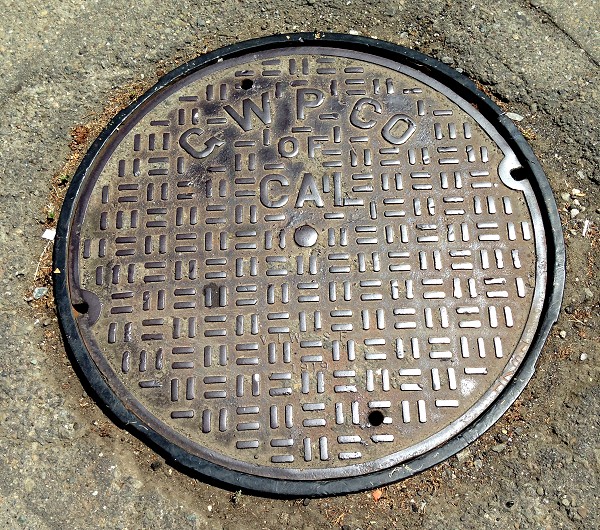
The old Great Western power lines are PG&E property today, but PG&E didn’t replace the utility hole covers. I’ve photographed over a dozen of them all around the old power plant. This is what most of them look like.
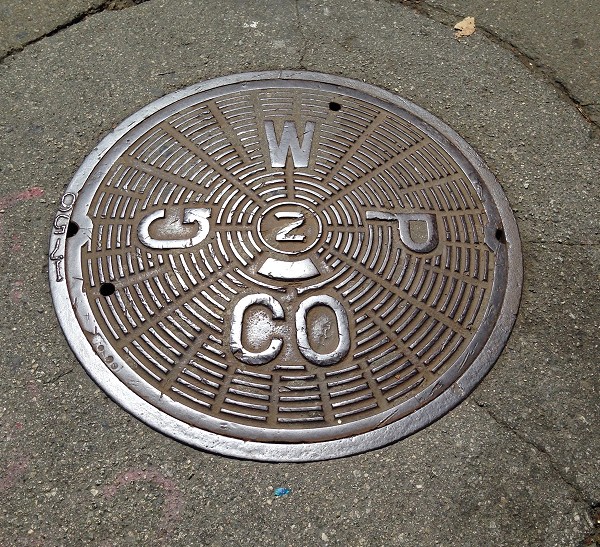
The details matter. The predominant lid design features two holes, two notches in the rim, and a wide “mustache” above the letters “CO”.
Another configuration eliminates the notches, and all of the features look fatter.
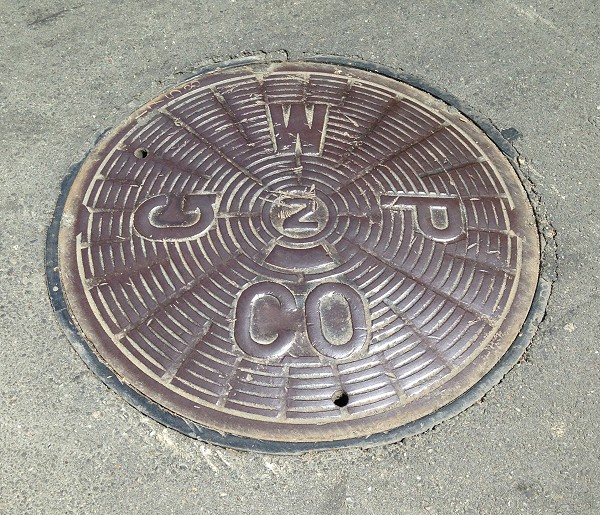
There’s a third configuration with several differences, the most obvious being a small mustache. It’s more elegant overall, and I suspect that it came later.
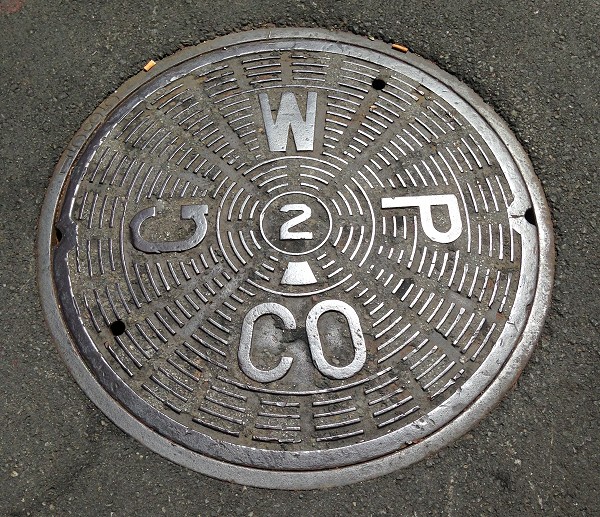
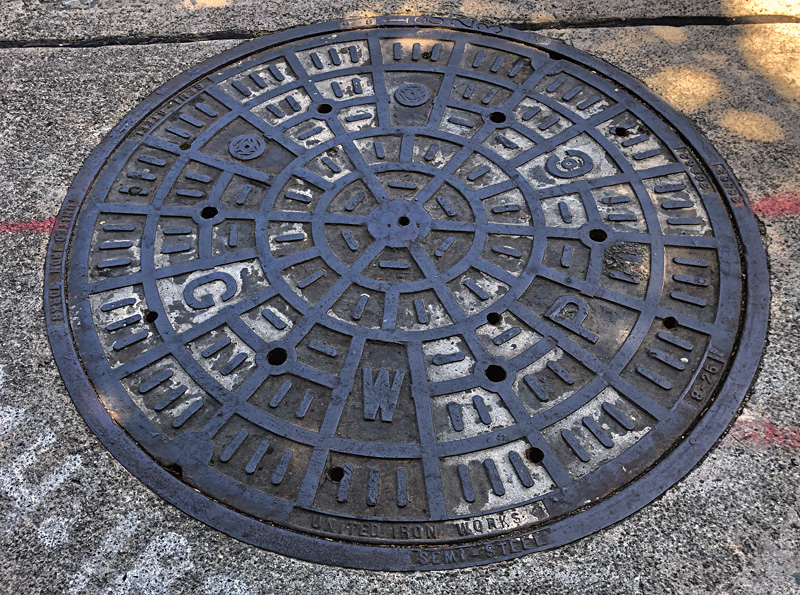
The fourth design evokes the complete name, “Great Western Power Company of California,” that appears on the power plant itself. I’ve only seen two of these.
Elsewhere around town there are examples of this configuration seen on Ivanhoe Street.
At its peak, the Great Western network, under the leadership of Mortimer Fleishhacker, extended all the way across California. Starting in 1908, the company dammed the Feather River at Big Meadows to create Lake Almanor reservoir, given its name for Alice, Martha and Elanor — the three children of the company’s vice president, Oakland lawyer Guy Earl.
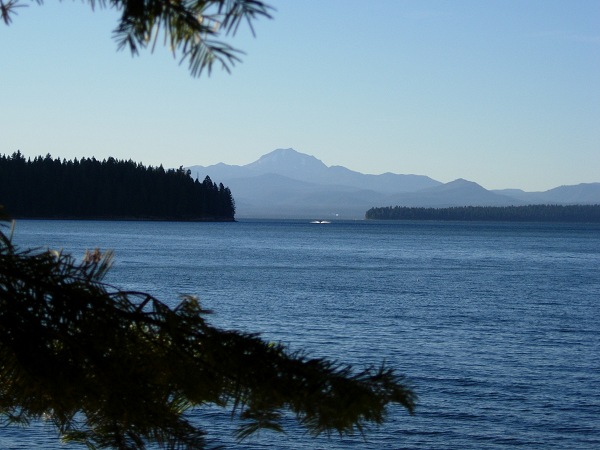
Lassen Peak and Lake Almanor, 22 September 2006
More dams and turbines were built along the Feather River to generate electricity in a mighty “stairway of power.” The power lines ran from there all the way to Oakland.
The colorful origin story of Great Western in 1905, and the colorful story of how Great Western invaded PG&E’s market in the Santa Rosa region in 1912, are both well told on the Comstock House website.
In another remnant of the once-great firm, the Great Western Power Trail in El Cerrito runs where a substation once supplied electricity to the Hutchinson Quarry (presumably part of the Hutchinson construction empire that left its sidewalk stamps all over Oakland).
I’m thinking that these covers survive in other places outside Oakland.
These lids are tough old hombres that have stood up to generations of traffic, but they do have limited lives. Several on 20th Street, and another right in the middle of Grand and Broadway, look more like this.
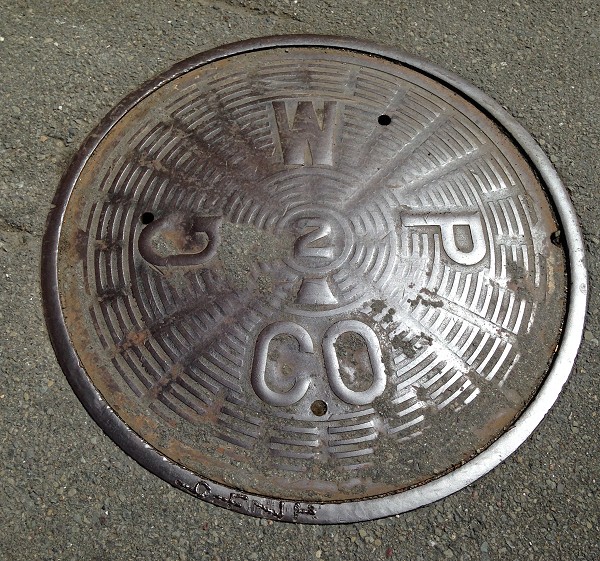
Some day, PG&E will have to replace them with their own branded lids, which are also interesting and attractive. I hope someone at that gigantic company is a historian who, in collaboration with the city’s heritage community, will see to it that some of these old lids are preserved.
 Oakland Underfoot
10 September 2016 at 3:30 pm
I took a good look at another example of the fourth design, and down at the bottom is the date 1919! And just above that is the initials of Vulcan Iron Works of San Francisco, the foundry at Francisco and Kearny that manufactured the lid. It’s listed in the 1919 San Francisco directory after Oakland’s United Iron Works, which was at 2nd and Jefferson Streets.